2026 Top Commercial LED Lighting Suppliers for Global Buyers
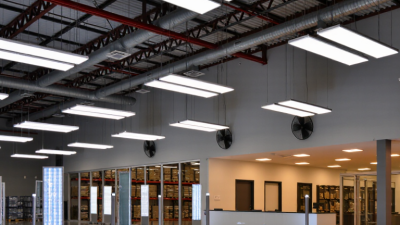
Choosing a commercial lighting supplier is not just a price comparison. The right partner can help match fixtures, controls, and service support to a building’s actual needs. A warehouse may need high-bay lights with dependable output, while an office may benefit from lower-glare panels and flexible dimming. Small differences matter.
Commercial Led Lighting projects also depend on installation conditions. Ceiling height, operating hours, temperature, and maintenance access can all affect fixture selection. A specification that looks strong on paper may perform differently in a dusty workshop or a busy loading area. Buyers should review photometric data, warranty terms, product availability, and technical support before committing.
The suppliers in this guide are considered through practical factors relevant to global buyers, including product range, customization, documented quality processes, and export experience. Requirements can vary by market, so confirm that products meet applicable regional standards and that replacement parts remain accessible. Ask for clear documentation, not only a polished product sheet. Details count.
No single supplier fits every project. That is worth remembering. Published claims may change, and a supplier’s strengths in one product category may not extend across its entire range. This guide offers a starting point for comparing options in 2026, not a substitute for project-specific checks. Good lighting takes care.
Understanding Commercial LED Lighting Suppliers and Their Role
2026 Top Commercial LED Lighting Suppliers for Global Buyers
Understanding Commercial LED Lighting Suppliers and Their Role
Commercial LED lighting suppliers do more than ship fixtures. They help buyers match products to real spaces, from warehouse aisles to hotel corridors. A useful supplier can provide photometric files, color temperature and color rendering data, driver details, and dimming compatibility. These details help designers check whether light reaches work surfaces evenly. They also help prevent glare and unexpected control problems after installation.
Reliable support matters. Ask how products perform in the intended environment, including heat, dust, and operating hours. Check whether test reports and warranty terms are clearly documented. A supplier should explain the limits of its data, not just present attractive efficiency figures. Samples can reveal details a spreadsheet misses, such as finish quality or how a fixture looks against a ceiling. Still, one sample cannot predict every installation. I would verify key specifications independently before placing a large order.
Tips: Share mounting height, room dimensions, local power requirements, and control plans when requesting a quotation. Compare like-for-like performance data, and confirm packaging and replacement-part arrangements before shipment.
2026 Top Commercial LED Lighting Suppliers for Global Buyers — Understanding Their Role
Commercial lighting suppliers help buyers select and source LED systems suited to their energy and project requirements. This chart compares relative energy use, not supplier performance.
Energy-use index: incandescent lighting = 100. The LED value of 25 represents the U.S. Department of Energy’s benchmark that LEDs use at least 75% less energy than incandescent lighting. Actual savings vary by product and application. Source: U.S. Department of Energy, LED Lighting.
Major Commercial LED Product Categories and Applications
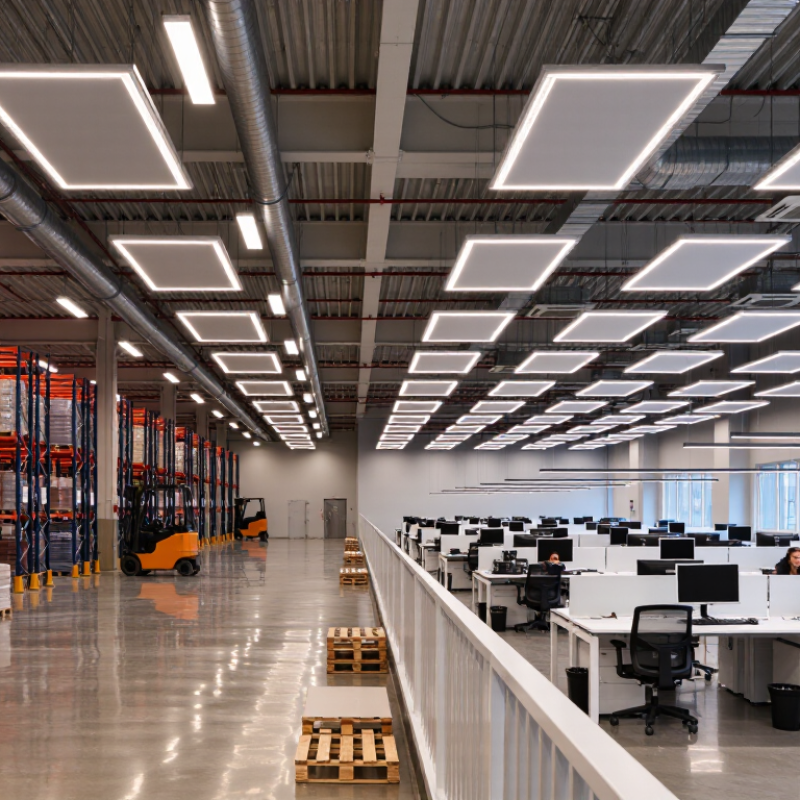
Commercial LED lighting includes high-bay fixtures, panels, linear lights, downlights, and weather-resistant luminaires. Each suits different ceiling heights, tasks, and operating conditions. In warehouses, high-bay fixtures can illuminate tall racks and loading areas; beam angle and mounting height affect shadows between aisles. Offices often use flat panels or suspended linear lights to provide broad, even illumination over desks. Glare still matters. A bright fixture can feel uncomfortable when workers look toward it all day.
Retail spaces may combine track lighting for merchandise with softer ambient lighting around walkways. Food preparation areas and workshops often need sealed fixtures that are easier to clean and better protected from dust or moisture. Outdoor loading zones commonly use floodlights, while parking areas may use pole-mounted luminaires. Check the fixture’s environmental rating against actual exposure; labels alone do not describe every site condition.
When comparing products, review light output, efficacy, color rendering, color temperature, dimming compatibility, and warranty terms. Controls such as occupancy sensors can reduce runtime in intermittently used rooms, but poor placement may cause unwanted switching. A sample installation helps. It can reveal glare, uneven coverage, or color differences that a specification sheet will not show. Even careful planning has limits: existing wiring, ceiling structure, and maintenance access can change the final choice.
How Global Buyers Evaluate LED Lighting Suppliers
Global buyers should evaluate LED lighting suppliers beyond price and product photographs. Start with the project’s actual conditions: mounting height, operating hours, ambient temperature, and local power supply. A supplier that asks these questions may be better prepared to recommend suitable products. Request photometric files, test reports, and clear explanations of lumen output, color consistency, and expected service life. Compare the assumptions behind each quotation. A lower price can exclude drivers, controls, or packaging details. Small details matter.
Check how products perform under heat, vibration, and repeated switching, especially for warehouses or outdoor sites. Ask whether sample units are available, and test them in the intended space before approving a large order. Confirm production capacity, lead times, spare-part availability, and warranty procedures in writing. Documentation should match the destination market’s applicable safety and efficiency requirements. Ask for evidence. Communication is another useful measure: are technical questions answered clearly, or passed between departments without resolution? No checklist catches everything. Buyers can still overlook installation conditions or changing project schedules, so keep assumptions visible and revisit them before placing an order.
Leading Commercial LED Lighting Suppliers in 2026
In 2026, leading commercial LED lighting suppliers do more than offer bright fixtures. They help buyers match light output, optics, and controls to real spaces. A warehouse with tall racks needs different beam distribution from a hotel corridor. Ask for photometric files, product specifications, and clear warranty terms before comparing quotes. Useful suppliers can explain lumen maintenance, color consistency, and driver options without hiding behind vague claims. Details matter.
For global projects, check whether a supplier can support sample testing, stable production, and replacement parts over time. Review test reports and confirm which standards apply in the destination market. A quick video call can also reveal how clearly technical questions are handled. Response speed is helpful, but it is not proof of quality. Nor is the lowest unit price. One detail buyers sometimes overlook is installation access: a difficult-to-service fitting can add real cost later. I would still verify every specification independently; supplier documents can be incomplete. The strongest partnerships combine dependable products with practical guidance, honest lead times, and support after delivery.
Global Sourcing, Standards, and Procurement Considerations
Global buyers should compare commercial LED lighting suppliers by documented performance, not catalog claims alone. Ask for test reports covering lumen output, color temperature, color rendering, flicker, and power consumption. Check that reports match the exact fixture configuration being quoted. A change in driver or optics can alter results. Small details matter.
Standards and approvals vary by destination market. Confirm applicable electrical safety, electromagnetic compatibility, and energy requirements with a qualified local reviewer before placing a large order. Request certificates and traceable model numbers, then verify their scope and validity. For example, a warehouse project may need high-bay fixtures rated for dust and moisture, while an office may prioritize glare control and consistent color. These needs should appear in the specification, not just in emails.
Procurement planning also means checking lead times, spare-part availability, packaging, warranty terms, and shipment responsibilities. Request a sample and test it under real operating conditions: note startup behavior, heat, and light distribution across the floor. Compare the supplier’s stated delivery schedule with production capacity and inspection milestones. I have seen planning focus too heavily on unit price; that can be shortsighted. Still, one sample cannot predict every batch, so define quality checks before production begins.