What Are Industrial LED Light Fixtures?
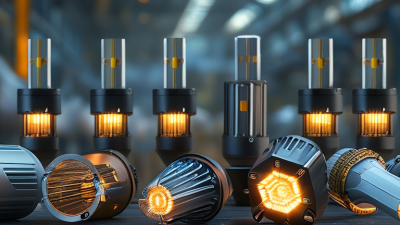
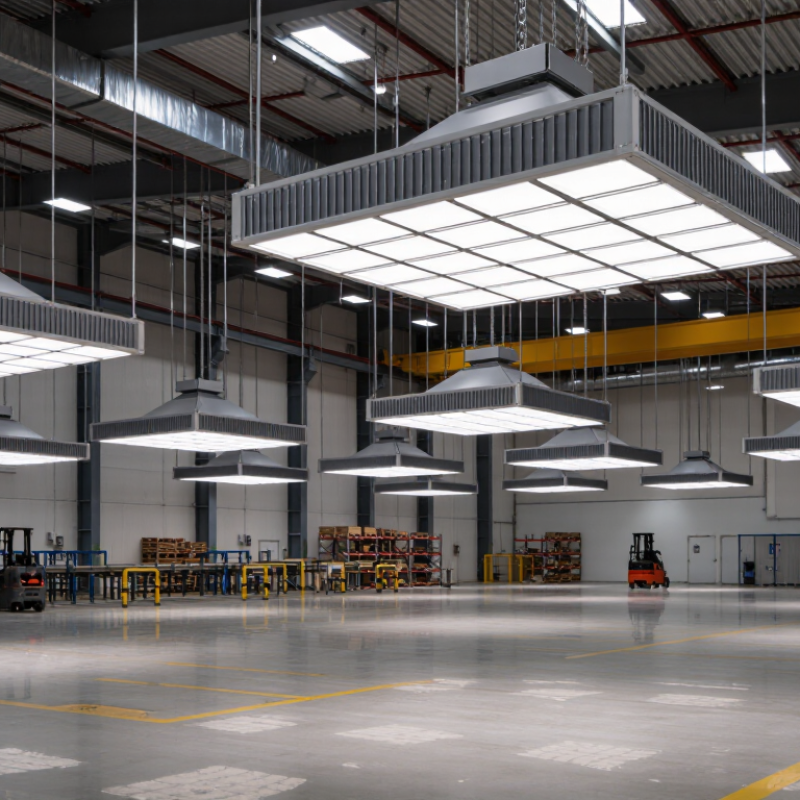
Industrial Led Light Fixtures are engineered lighting systems for demanding spaces such as factories, warehouses, workshops, and distribution centers. Unlike residential lamps, they must manage dust, vibration, heat, moisture, and long operating hours. A typical high-bay fixture may hang 20 feet above a concrete floor, illuminating aisles, machinery, and safety markings. Its performance depends on more than wattage. Optics, color temperature, glare control, thermal design, ingress protection, and control compatibility also matter.
Industry data supports this shift toward efficient solid-state lighting. The U.S. Department of Energy’s Solid-State Lighting R&D Opportunities report highlights efficacy, product reliability, controls, and connected lighting as continuing priorities. The International Energy Agency’s Energy Efficiency 2023 report also identifies efficient lighting and controls as practical tools for reducing electricity demand. These findings explain why many facilities are replacing metal-halide, fluorescent, and high-pressure sodium systems with LED alternatives. The benefits can include lower energy use, reduced relamping, faster startup, and more consistent illumination.
But the decision is not automatic. Not every LED fixture suits every ceiling height or production environment. A poorly selected beam angle can create dark aisles, harsh glare, or wasted light. Claims about dramatic savings also require careful comparison. Operating hours, maintenance history, utility rates, and installation costs should be measured together. Real facilities are rarely perfect. Therefore, understanding Industrial Led Light Fixtures requires technical specifications and practical judgment, not marketing language alone.
Defining Industrial LED Fixtures: 75% Less Energy and 25× Longer Life
What Are Industrial LED Light Fixtures?
Defining Industrial LED Fixtures: 75% Less Energy and 25× Longer Life
Industrial LED light fixtures are purpose-built systems for warehouses, factories, workshops, and high-bay spaces. They combine efficient light-emitting diodes, heat sinks, drivers, optics, and protective housings. The U.S. Department of Energy reports that LED lighting can use up to 75% less energy and last up to 25 times longer than incandescent lighting. That comparison matters, but it is not universal. Industrial LEDs should be compared with the existing fixture type, not an idealized bulb.
The savings become practical above a production floor. A 12-meter ceiling may need fewer fixtures when optics direct light toward aisles and work surfaces. Lower relamping frequency can also reduce lift rentals, shutdowns, and maintenance exposure. The International Energy Agency identifies lighting as roughly 15% of global electricity consumption, showing why efficiency upgrades remain significant. Still, energy performance depends on controls, operating hours, ambient temperature, and installation quality.
Not every LED fixture reaches its advertised life. Dust, vibration, poor ventilation, and unstable power can shorten driver performance. I have seen specifications look excellent until heat buildup changed the maintenance plan. The DOE Solid-State Lighting reports emphasize efficacy, thermal management, and reliability testing for this reason. Check delivered lumens, warranty terms, ingress protection, color quality, and measured power before replacing equipment. The number on the carton is only the beginning.
Core Components and Optics: Achieving Up to 200 lm/W System Efficacy
What Are Industrial LED Light Fixtures?
Core Components and Optics: Achieving Up to 200 lm/W System Efficacy
Industrial LED light fixtures combine LED modules, drivers, heat sinks, housing, and optical elements. Each part affects system efficacy, reliability, and light distribution. A high-output LED package may exceed 200 lumens per watt in laboratory conditions. The complete fixture usually delivers less. Driver losses, thermal resistance, wiring, and protective covers reduce the final figure.
Optics determine where those lumens go. Narrow lenses can place concentrated light between tall storage racks. Wider beams spread illumination across work areas, reducing dark patches and harsh contrast. Prismatic or diffused optics may improve visual comfort, but they can absorb some light. Good design matches beam angle, mounting height, surface reflectance, and task requirements. More lumens do not automatically create better visibility.
Thermal management is equally important. An aluminum heat sink, open airflow paths, and stable LED connections help control junction temperature. Excess heat accelerates lumen depreciation and may shorten driver life. In field assessments, measured performance often differs from product-sheet claims. That is normal.
Reliable specifications should identify photometric test methods, power input, color consistency, lifetime projections, and operating temperature. Independent laboratory data adds credibility. Aiming for up to 200 lm/W system efficacy is technically possible in carefully optimized designs, but it should never replace glare control, uniformity, or maintainability. The target sounds impressive. The application decides whether it matters.
Performance Standards: IP65 Protection, LM-80 Testing, and 50,000+ Hour L70
Industrial LED light fixtures are built for dust, moisture, and long operating hours. Their performance depends on more than brightness. IP65 protection, LM-80 testing, and a 50,000-hour L70 rating provide useful evidence, but each describes a different risk.
Under IEC 60529, IP65 means dust-tight protection and resistance to water jets. It does not mean submersion protection. In a factory, this matters near washdown areas, loading bays, and dusty production lines. Poor installation can still defeat a strong enclosure. Seals, cable glands, and mounting angles deserve inspection.
LM-80 testing measures lumen maintenance for LED packages or modules under controlled temperatures and currents. It does not test the complete fixture. TM-21 calculations then project long-term performance from LM-80 data. The U.S. Department of Energy’s 2020 Energy Savings Forecast reported that solid-state lighting could deliver about 348 terawatt-hours of annual U.S. electricity savings by 2035, showing why reliable efficiency data matters. A 50,000-hour L70 rating means the light source is expected to retain 70% of its initial lumens after that period. It is not a guaranteed failure point. Heat, dust, driver quality, and operating cycles can shorten real service life. I would still request test conditions and warranty limits. The number alone is incomplete.
| Performance Dimension | Relevant Standard or Rating | Typical Requirement or Data Point | What It Means for Industrial Applications |
|---|---|---|---|
| Ingress Protection | IP65 | First digit 6: dust-tight enclosure. Second digit 5: protection against water jets from any direction. | Suitable for many dusty industrial areas and locations requiring routine hose-down cleaning, provided installation conditions match the rating. |
| LED Lumen Maintenance Testing | IES LM-80 | Measures lumen maintenance and color maintenance of LED packages, arrays, or modules over time under specified temperature and drive-current conditions. | Provides component-level aging data. LM-80 is not, by itself, a complete test of the finished light fixture. |
| Lumen Maintenance Projection | IES TM-21 | Uses LM-80 test data to project long-term lumen maintenance beyond the measured test period, within applicable calculation limits. | Helps estimate how much light an LED system is expected to retain during its service life. |
| Rated Useful Life | L70: 50,000+ hours | At the stated operating conditions, the fixture is projected to deliver at least 70% of its initial light output after 50,000 or more operating hours. | At 50,000 hours, the fixture is not expected to produce zero light; rather, its average light output is projected to remain at or above 70% of initial lumens. |
| Fixture-Level Reliability | LM-84 and field or system data | Finished-fixture performance should be evaluated separately from LED-package data, including optics, driver, thermal design, and enclosure effects. | Provides a more complete view of real-world fixture performance than LED component data alone. |
| Energy Efficiency | System efficacy | Measured in lumens per watt and includes the LED source, driver, optics, and fixture losses. | Higher system efficacy can reduce connected load and operating energy while maintaining the required illuminance. |
| Color Quality | CRI and CCT | Common industrial color temperatures include approximately 4,000 K to 5,000 K. General industrial fixtures often specify CRI 70 or higher, depending on the visual task. | Appropriate color temperature and color rendering support visibility, inspection, safety, and task recognition. |
| Operating Temperature | Ambient temperature rating | The fixture should state a permissible ambient-temperature range, such as a cold-start limit and a maximum operating temperature. | Thermal compatibility is essential in warehouses, factories, cold rooms, furnaces, and other areas with temperature extremes. |
| Electrical Protection | Surge protection and driver rating | Specifications may include a surge-protection level, input-voltage range, power factor, and total harmonic distortion limits. | These characteristics help protect the fixture and support stable operation on industrial electrical systems. |
| Mechanical Durability | Impact rating, where specified | An impact rating such as IK08 or IK10 indicates resistance to defined mechanical impacts under the applicable test method. | Useful in production areas, loading zones, workshops, and other locations exposed to accidental impact. |
| Controls and Dimming | 0-10 V, DALI, occupancy, or daylight control | Control compatibility depends on the driver and fixture design; dimming range and minimum load should be verified before installation. | Controls can reduce energy use and provide scheduling, occupancy-based operation, or daylight-responsive lighting. |
| Maintenance Planning | Lumen depreciation and cleaning schedule | Actual performance depends on ambient temperature, operating hours, driver reliability, dirt accumulation, installation, and ventilation. | Periodic cleaning and condition checks help maintain illuminance and extend the practical service life of the lighting system. |
Industrial Applications: High-Bay, Low-Bay, Warehouse, and Hazardous Locations
What Are Industrial LED Light Fixtures?
Industrial Applications: High-Bay, Low-Bay, Warehouse, and Hazardous Locations
Industrial LED light fixtures are purpose-built systems for demanding spaces. They combine efficient light sources, durable housings, thermal management, and controlled beam patterns.
The U.S. Department of Energy reports that LED lighting can use at least 75% less energy than incandescent technology and last up to 25 times longer. Its 2020 U.S. Lighting Market Characterization also found LEDs represented about 48% of installed general-lighting units. These figures support the shift toward solid-state lighting, but fixture selection still requires site measurements.
High-bay fixtures usually serve ceilings above 20 feet, such as manufacturing floors and distribution centers. Narrow optics can place light between tall racks. Wider beams can reduce dark zones across open work areas. Low-bay fixtures suit lower ceilings, often below 20 feet, where excessive intensity may create glare.
Think about height. I have seen bright installations that still left workstations poorly lit. Mounting height, reflectance, aisle width, and glare control matter more than wattage alone.
Warehouse lighting should support safe walking, scanning, loading, and equipment movement. Motion controls can reduce operating hours, although poor sensor placement creates annoying dark patches.
Hazardous locations require fixtures certified for the specific classified environment, temperature limits, and vapors or dust involved. OSHA guidance stresses properly approved equipment for these locations. A qualified lighting professional should verify the classification before installation.
Not every “industrial” fixture fits. The International Energy Agency continues to identify efficient lighting as an important energy-saving measure, yet real performance depends on maintenance, controls, and accurate photometric design.
Selection Criteria: DLC Certification, CRI 80+, CCT, Controls, and Payback
Industrial LED light fixtures are built for demanding spaces such as warehouses, workshops, factories, and loading areas. They typically use sealed housings, durable lenses, and mounting systems suited to dust, vibration, and long operating hours. In practice, fixture selection should begin with the task below the light, not the fixture’s appearance.
DLC certification can support rebate eligibility and provides a useful efficiency benchmark. Verify the exact model in the current qualified products list, because listings and requirements can change. For color quality, choose CRI 80 or higher when workers inspect labels, wiring, finishes, or product defects. A 4000K CCT often gives a balanced, neutral appearance. Higher CCT may feel sharper, but it can appear harsh in reflective rooms. I once assumed brighter light always improved a workspace. It did not.
Controls deserve equal attention. Occupancy sensors, daylight harvesting, dimming, and network controls can reduce wasted runtime, but only when they match the fixture’s driver and the building’s wiring. Check low-temperature operation, sensor coverage, and commissioning needs before ordering. For payback, compare fixture cost, installation labor, energy savings, maintenance reduction, rebates, and expected operating hours. A simple estimate divides total net project cost by annual savings. Be cautious with optimistic projections. A space that operates fewer hours may produce a slower return, even with efficient LEDs. Keep utility rates and maintenance records in the calculation.
Related Posts
-
Top 10 Industrial Led Fixtures for Global Buyers Best Choices?
-
7 Leading Industrial Led Fixtures to Illuminate Your Workspace
-
Unlocking Energy Efficiency in Manufacturing with Industrial Led Fixtures and Industry Insights
-
Future Innovations in Industrial Lighting and Their Advantages for Global Buyers
-
10 Essential Tips for Choosing the Right Industrial Led Lighting for Your Business
-
Best Industrial Light Fixtures for Your Business Needs?