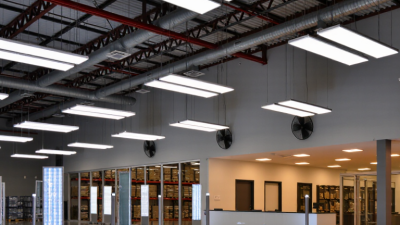
Top 10 Commercial LED Fixtures for Global Buyers
Choosing among the Top 10 Commercial LED Fixtures for Global Buyers takes more than comparing prices or wattage. A bright warehouse high bay may suit a tall distribution center, while a low-glare panel works better over office desks. Details matter. Check lumen output, efficacy, color rendering, glare control, and dimming compatibility against the actual space. Lighting researcher Peter Boyce’s work offers a useful takeaway: lighting should serve both the visual task and the people performing it.
This guide compares fixture types for offices, retail spaces, warehouses, and other commercial settings. It considers practical details buyers can verify, including mounting options, rated life, warranty terms, driver access, and product documentation. For international projects, confirm voltage compatibility, local safety requirements, and replacement-part availability before ordering. A fixture can look ideal on a spec sheet and still disappoint when its beam pattern misses a work surface or its controls do not match the building system. That happens. No single model suits every site, and product claims deserve careful checking. The selections ahead are intended to help buyers ask sharper questions, compare like with like, and shortlist Commercial Led Fixtures that fit their operating conditions—not just a catalog photograph.
How Commercial LED Fixtures Are Classified
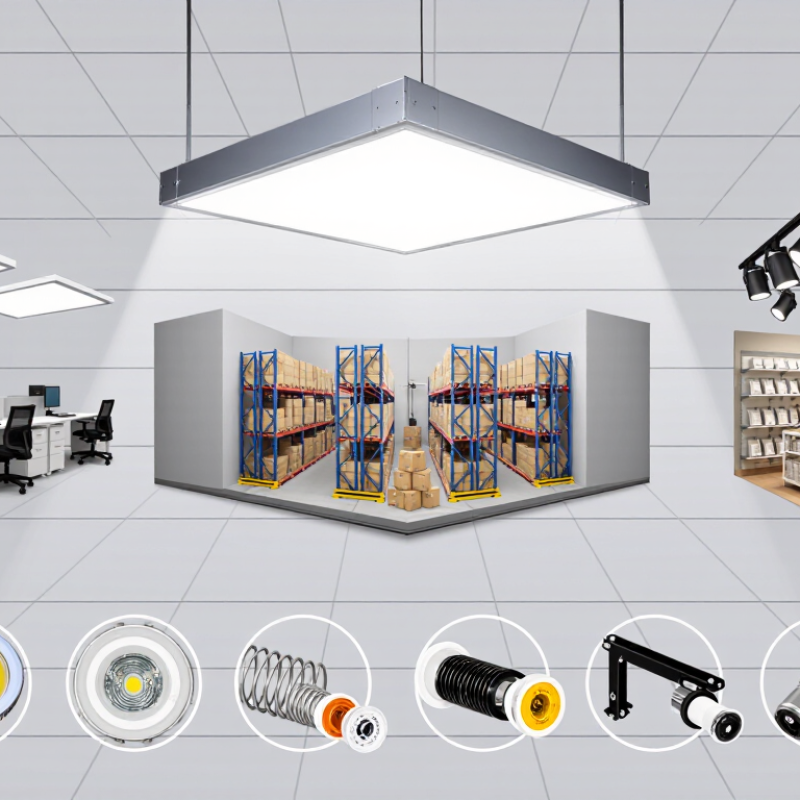
Commercial LED fixtures are often classified by their application and physical form. High-bay fixtures suit tall spaces such as warehouses, where light must reach floors from ceilings several metres high. Low-bay models serve lower ceilings, including workshops and small retail areas. Troffers fit recessed ceiling grids in offices, while linear fixtures work well over counters, production lines, and long aisles. Outdoor classifications include wall-mounted area lights and pole-mounted roadway fixtures. The categories can overlap. A linear fixture, for example, may be designed for either an office or an industrial workspace.
Mounting style, light distribution, and operating conditions provide another useful way to compare fixtures. Surface-mounted units attach directly to ceilings; suspended models hang on cables or rods. Narrow optics concentrate light on shelving, while wider distributions help illuminate open floor areas. Check rated output, colour temperature, dimming compatibility, and ingress protection against the actual site conditions. Dust near machinery or moisture around loading bays can affect the choice. It depends. Catalog terms are not always consistent, so buyers should verify dimensions, photometric data, and installation requirements. A fixture that looks suitable on a plan may create glare at a worker’s eye level. Small details matter.
Ten Common Types of Commercial LED Fixtures
Commercial spaces use different LED fixtures because ceilings, tasks, and exposure vary. Flat panels suit offices with suspended ceilings, while troffers fit standard recessed ceiling grids. Linear strip fixtures work well in stockrooms and service corridors. High-bays illuminate tall warehouses; low-bays serve lower-ceiling workshops. Details matter. Recessed downlights create focused pools in retail areas, and track lights let staff redirect beams toward displays. Wall packs brighten building entrances, area lights cover parking lots, and vapor-tight fixtures protect lighting in damp or dusty work zones.
The International Energy Agency reports that lighting accounts for about 15% of global electricity consumption. The U.S. Department of Energy says LED products use at least 75% less energy than incandescent lighting. These figures offer useful context, but they do not predict savings for every commercial installation. Controls, operating hours, mounting height, and existing equipment all affect results. A high-bay fixture may look efficient on paper, yet poor optics can leave dark patches between aisles. That is easy to overlook. Buyers should compare light distribution, color quality, ingress protection, and maintenance access alongside wattage. The right choice is sometimes less obvious than a catalogue suggests.
Top 10 Commercial LED Fixtures for Global Buyers
Typical input wattage ranges (W) for ten common commercial LED fixture types.
Ranges are indicative examples based on commonly specified commercial products, not universal limits. Actual wattage varies by fixture size, light output, optics, and application; compare lumens and efficacy alongside wattage.
How Fixture Types Serve Different Applications
Fixture choice starts with the task beneath it. In warehouses, high-bay luminaires concentrate light over tall racks and loading aisles. Check mounting height, beam distribution, and forklift glare; raw lumen output alone can mislead. Offices and classrooms often suit recessed troffers or linear panels, which spread light across desks and reduce harsh bright spots.
For hospitality, adjustable downlights can create warmer pools of light, but they may leave corridors uneven if spacing is too wide. Damp or dusty areas call for sealed, gasketed fixtures, such as vapor-tight units in washdown zones or cold rooms. Outdoor wall packs and area lights need controlled optics to limit spill onto neighboring windows.
Fit matters. A useful benchmark comes from the U.S. Department of Energy’s Energy Saver guidance: LEDs use at least 75% less energy and can last up to 25 times longer than incandescent lighting.
That comparison is not a direct estimate against every commercial fluorescent system, so buyers should compare measured fixture efficacy, controls, and operating hours. Dimming helps. Occupancy sensors can cut unnecessary runtime in storage rooms, though poor placement may leave a workbench dark. A mock-up at the actual mounting height often reveals problems that a catalogue image cannot.
Performance, Controls, and Certification Factors
For global buyers comparing commercial LED fixtures, efficacy is only a starting point. The IEA estimates that lighting accounts for about 15% of global electricity use, making fixture selection and control strategy meaningful energy decisions. The U.S. Department of Energy reports that LEDs use at least 75% less energy than incandescent lamps, but that comparison does not predict savings against every existing commercial system. Compare delivered lumens per watt, measured output, color consistency, and thermal performance under realistic operating conditions. Controls matter. Check dimming compatibility, occupancy sensing, daylight response, and whether settings remain stable after power loss. A control system that staff cannot commission or use may deliver less than its forecast savings.
Certification deserves the same scrutiny as performance. Request test reports for the exact model and configuration, not a similar product family. IEC 60598 addresses luminaire safety; IEC 62471 evaluates photobiological safety. LM-79 reports can document electrical and photometric performance, while LM-80 and TM-21 support LED package lifetime projections. These documents are not interchangeable. Confirm that the certification mark and test scope are accepted in the destination market, and check local requirements before shipment. A neat specification sheet can still hide a mismatch between driver, optics, and controls. I would also verify warranty terms and replacement-part availability; these details are easy to overlook, and I have seen them complicate otherwise sound projects.
How Global Buyers Compare Suppliers and Select Fixtures
Global buyers should compare suppliers by evidence, not by headline wattage or catalog photos. Request photometric reports, efficacy data, color consistency, warranty terms, and clear details on dimming compatibility.
Paper specs help. But ask whether the figures apply to the exact fixture configuration you plan to order.
A sample can reveal loose connectors, uneven diffuser brightness, or a finish that looks different under warehouse lighting. Check packaging dimensions, spare-part access, and response times, too; delays often begin with small unanswered questions.
Fixture selection starts with the room. A high-bay unit above a loading area has different needs from a damp-rated fixture near a washdown zone. Compare beam angle, mounting height, glare control, color temperature, and expected operating hours against the project layout.
Details matter.
Confirm that electrical ratings and product documentation suit the destination market, and clarify who handles technical support after delivery. A supplier may offer impressive efficacy yet provide vague maintenance guidance.
That gap is easy to underestimate. Before approving a large order, test a small installation in the actual space and measure light levels at working surfaces. One review rarely catches every issue.
Related Posts
-
China Top 10 Commercial LED Fixture Manufacturers
-
2026 Top Commercial LED Lighting Suppliers for Global Buyers
-
China Leading the Charge in Innovative Led Light Design Solutions
-
Ultimate Checklist for Sourcing the Best Exterior LED Light Fixtures: 10 Key Factors to Consider
-
Top 10 Outdoor Lighting Fixture Manufacturers from China at the 137th Canton Fair
-

China Top Led Outdoor Lighting Suppliers for Global Buyers?