How to Choose Industrial LED Lighting for Your Business?
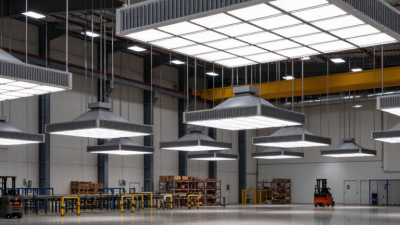
Choosing the right Industrial Led Lighting can influence safety, productivity, energy costs, and maintenance schedules. A warehouse with high ceilings needs different lighting from a precision assembly area. Forklift aisles require clear visibility, while inspection stations may demand stronger color accuracy. The best decision begins with the work, not the fixture catalogue.
Experienced facility managers usually examine mounting height, operating hours, dust exposure, moisture, ambient temperature, and required illumination levels. A damp loading bay may need sealed fixtures with suitable ingress protection. A machine shop might benefit from low-flicker lighting and durable housings. Color rendering also matters when workers inspect products, wiring, labels, or surface defects. These details often reveal problems that wattage comparisons miss.
Energy efficiency remains important, but it should not stand alone. Review delivered lumens, beam distribution, controls, warranty terms, driver quality, and replacement access. A qualified lighting professional can verify calculations and recommend an appropriate layout. Independent testing or recognized certification can provide additional confidence, although paperwork does not replace site evaluation. Walk the facility at different times.
There is no perfect formula. Some businesses overestimate future savings and underestimate installation disruption. Others choose the cheapest fixture, then face glare, dark corners, or early failures. A practical selection should balance performance, worker comfort, electrical compatibility, and long-term serviceability. Record the existing conditions, compare realistic options, and question every attractive promise. Reliable Industrial Led Lighting is not merely bright; it is suitable, measurable, and dependable in daily operation.
Understanding Industrial LED Lighting Requirements
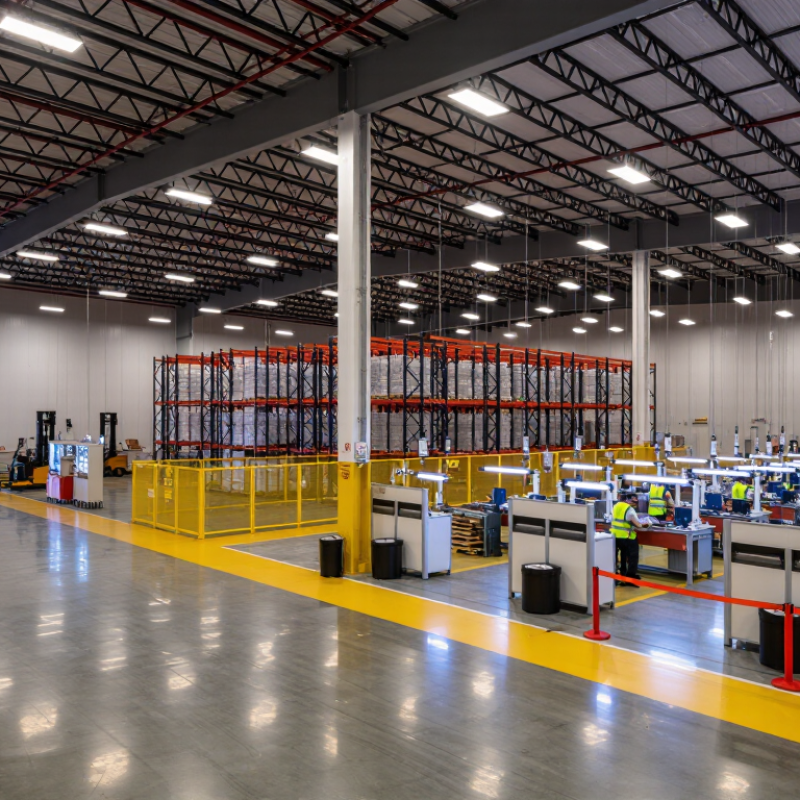
Choosing industrial LED lighting starts with the work, not the fixture. A warehouse storing small parts needs different visibility from a machine shop with moving equipment. Measure the task area, ceiling height, aisle width, and existing light levels. Illuminance should match the activity and applicable local standards. Uniform lighting matters too. Dark patches can cause errors, even when average brightness looks acceptable.
Check the environment carefully. Dust, moisture, heat, vibration, and cleaning methods influence the required IP and impact ratings. Select a suitable color temperature and color rendering level for accurate inspection. Low-flicker drivers can reduce visual discomfort near rotating machinery. Emergency lighting, controls, and wiring must be reviewed by qualified professionals. I once saw a bright installation fail because its lenses collected dust within months. The calculations were correct. The conditions were not.
Tips: Walk through the facility during every shift. Record shadows near shelves, conveyors, and workbenches. Ask operators where visibility feels weak. Compare measured lux values with the design target. Leave access for cleaning and replacement. Dimming can reduce energy use, but overly aggressive settings may create unsafe work areas. Review heat ratings against the site’s hottest season. A trial installation over one aisle can reveal glare, shadows, and maintenance problems before full deployment. Do not rely only on catalogue figures. Real conditions often disagree.
Comparing LED Fixture Types and Performance Specifications
How to Choose Industrial LED Lighting for Your Business?
Comparing LED fixture types starts with the work area, mounting height, and dust exposure. High-bay fixtures suit warehouses with ceilings above 20 feet. Low-bay fixtures work better in shorter production rooms. Linear fixtures spread light along aisles and shelving. Area lights support loading yards, parking zones, and building perimeters. Vapor-tight fixtures protect against moisture, dust, and frequent cleaning.
Measure the task. Then compare performance specifications. Lumens show total light output, while lux describes light reaching the work surface. Efficacy, measured in lumens per watt, helps estimate energy performance. Beam angle affects spacing, shadows, and glare. A narrow beam can brighten tall racks, but it may create dark gaps. Color temperature changes the visual feel, while CRI influences how clearly workers see labels and materials.
I have seen projects choose the highest lumen rating and still produce uneven floors. That choice looked efficient on paper. It was not. Check the photometric layout, not only the fixture label. For demanding spaces, review IP and IK ratings, operating temperature, flicker performance, dimming compatibility, and expected L70 life. Controls can reduce energy use, but sensors need correct placement and commissioning. A reliable selection also considers maintenance access, warranty terms, and local electrical requirements. Specifications rarely tell the whole story.
| LED Fixture Type | Typical Business Applications | Typical Input Power | Typical Light Output | Typical Efficacy | Recommended Mounting Height | Common Beam Options | Typical CCT | Typical CRI | Typical IP Rating | Expected Rated Life | Key Selection Considerations |
|---|---|---|---|---|---|---|---|---|---|---|---|
| LED High Bay | Warehouses, distribution centers, manufacturing facilities, sports halls | 100–300 W | 15,000–48,000 lm | 130–170 lm/W | 6–15 m | 60°, 90°, 120° | 4,000–6,500 K | 80–90+ | IP54–IP66 | 50,000–100,000 hours | Choose higher lumen output for greater mounting heights. Check glare control, aisle layout, occupancy controls, and ambient temperature ratings. |
| LED Low Bay | Workshops, retail backrooms, service areas, low-ceiling production spaces | 50–150 W | 7,000–24,000 lm | 120–165 lm/W | 3–7 m | 90°, 120°, wide distribution | 3,500–5,700 K | 80–90+ | IP40–IP65 | 50,000–100,000 hours | Suitable for lower ceilings where high-bay optics may create excessive brightness or uneven illumination. |
| LED Linear High Bay | Long aisles, factories, warehouses, assembly lines, grocery facilities | 60–240 W | 9,000–40,000 lm | 130–180 lm/W | 5–12 m | 30°–60° aisle optics, 90°, 120° | 4,000–6,500 K | 80–90+ | IP40–IP65 | 50,000–100,000 hours | Effective for continuous rows and aisles. Select optics according to rack spacing and required vertical illumination. |
| LED Troffer or Flat Panel | Offices, schools, healthcare facilities, commercial interiors | 25–75 W | 3,000–9,000 lm | 100–150 lm/W | 2.5–4 m | Wide, typically 100°–120° | 3,000–5,000 K | 80–90+ | IP20–IP44 | 50,000–100,000 hours | Prioritize low glare, uniform luminance, flicker performance, dimming compatibility, and visual comfort. |
| LED Vapor-Tight Fixture | Cold rooms, food-processing areas, parking structures, washdown areas | 30–120 W | 4,000–18,000 lm | 110–160 lm/W | 2.5–8 m | Wide, typically 100°–120° | 4,000–6,500 K | 80+ | IP65–IP69K | 50,000–100,000 hours | Confirm resistance to moisture, dust, chemicals, temperature changes, and cleaning procedures before installation. |
| LED Outdoor Area Light | Parking lots, loading areas, campuses, pathways, commercial grounds | 60–300 W | 8,000–45,000 lm | 120–170 lm/W | 4–12 m poles | Type II, III, IV, V distributions | 3,000–5,700 K | 70–90+ | IP65–IP66 | 50,000–100,000 hours | Use photometric layouts to control spill light, meet uniformity targets, and avoid over-lighting adjacent properties. |
| LED Floodlight | Building façades, yards, sports areas, security lighting, loading zones | 50–500 W | 6,000–75,000 lm | 110–160 lm/W | 3–20 m | 15°, 30°, 60°, 90° | 3,000–6,500 K | 70–90+ | IP65–IP66 | 50,000–100,000 hours | Beam angle, aiming, glare shielding, wind loading, and surge protection are important for reliable outdoor performance. |
| LED Hazardous-Location Fixture | Petrochemical facilities, chemical processing, grain handling, industrial environments with classified areas | 40–200 W | 5,000–32,000 lm | 100–160 lm/W | 3–12 m | 60°, 90°, 120° | 4,000–6,500 K | 70–90+ | IP66–IP68 | 50,000–100,000 hours | Verify the fixture’s applicable hazardous-area certification, temperature class, enclosure rating, and installation requirements. |
| Performance Specifications to Compare Before Purchase | |||||||||||
| Luminous Efficacy | Light output produced per watt of electrical input | Higher lm/W generally reduces energy consumption for the same target illuminance | Compare system efficacy, not only the LED chip efficacy. Include driver losses and control performance. | ||||||||
| Lumen Output | Total visible light emitted by the fixture | Select according to mounting height, spacing, task requirements, and required lux or foot-candle levels | Avoid selecting fixtures by wattage alone. A lighting layout is the most reliable way to confirm coverage and uniformity. | ||||||||
| Color Temperature | The appearance of light, measured in Kelvin | 3,000–4,000 K: warmer appearance; 4,000–5,000 K: neutral; 5,000–6,500 K: cooler appearance | Choose based on visual comfort, work type, safety requirements, and the surrounding environment. | ||||||||
| Color Rendering Index | How accurately colors appear under the light source | CRI 80+ is common for general industrial use; CRI 90+ is preferred where color inspection is important | For critical color tasks, also review R9 or equivalent saturated-red performance when provided. | ||||||||
| Glare and Visual Comfort | The degree to which a luminaire causes discomfort or reduces visibility | Review shielding, diffuser design, luminance, beam angle, and UGR information where applicable | High-bay aisles, offices, and inspection areas may require different glare-control strategies. | ||||||||
| Ingress Protection | Resistance to solids and water entering the enclosure | IP20 for dry interiors; IP65 or higher for dusty, wet, or washdown environments | The IP rating does not automatically confirm chemical resistance, corrosion resistance, or suitability for hazardous locations. | ||||||||
| Controls and Dimming | Sensors and control systems that adjust lighting according to occupancy or daylight | Common options include occupancy sensing, daylight harvesting, 0–10 V dimming, DALI, and networked controls | Confirm control compatibility, sensor coverage, minimum dimming level, commissioning needs, and cybersecurity requirements for connected systems. | ||||||||
| Operating Temperature | The ambient temperature range in which the fixture is designed to operate | Industrial products commonly support approximately −40°C to +50°C, depending on design | Check the complete fixture and driver rating, especially in cold storage, high-temperature production, and enclosed spaces. | ||||||||
| Surge Protection | Protection against temporary voltage spikes | Higher surge ratings are generally preferred for outdoor, utility-exposed, and industrial installations | Review the surge rating in kilovolts and the installation’s grounding and electrical protection requirements. | ||||||||
| Planning Note: The specifications above are representative industry ranges rather than guarantees for every product. Final selection should be based on a photometric layout, required illuminance and uniformity, mounting conditions, operating environment, controls, maintenance access, electrical requirements, and applicable local codes. | |||||||||||
Evaluating Energy Efficiency, Durability, and Safety
Choosing industrial LED lighting requires more than comparing wattage. The International Energy Agency reports that lighting consumes about 15% of global electricity. The U.S. Department of Energy also states that LED systems can use at least 75% less energy than incandescent lighting and last up to 25 times longer. These figures are useful, but they can mislead when they ignore mounting height, operating hours, controls, and heat.
Check delivered lumens, not advertised lumens alone. A high-efficiency fixture may produce 150 lumens per watt in laboratory conditions, yet dust, poor optics, and elevated temperatures can reduce actual performance. In a warehouse, measure light at floor level and workstations. Avoid excessive brightness. It can create glare and hide hazards.
Durability depends on more than an IP rating. Review the operating temperature range, surge protection, vibration resistance, and expected lumen maintenance. The Illuminating Engineering Society recommends evaluating maintained illuminance rather than initial output. Safety also includes emergency visibility, color rendering, flicker, and electrical installation quality. NIOSH research links poor visual conditions with higher fatigue and error risks, especially during demanding tasks.
Ask for test reports from recognized laboratories. Confirm photometric data, thermal testing, and safety certifications. A practical trial is still valuable. I would test fixtures during a full production shift, because specifications rarely capture every condition. Even then, maintenance records should challenge the first decision.
Planning Installation, Controls, and Maintenance
Choosing industrial LED lighting starts with the installation plan, not the fixture catalog. Walk through the facility at different times of day. Mark aisles, loading zones, machinery, emergency paths, and areas with dust or moisture. Measure mounting heights and existing illumination levels with a calibrated light meter. A photometric layout can reveal dark patches before equipment arrives. Use qualified electrical professionals and follow applicable local electrical and workplace safety requirements.
Controls should match real work patterns. Occupancy sensors can reduce lighting in empty storage aisles, while daylight sensors may help near skylights. Keep controls simple enough for shift workers to understand. Label wall switches clearly. Test sensor coverage with forklifts, workers, and closed doors. A small pilot area is useful. Our first control layout might look efficient on paper, yet create annoying delays during night shifts. That feedback matters.
Maintenance planning protects both light quality and operating costs. Keep an asset map showing fixture locations, installation dates, circuit numbers, and service history. Schedule inspections for dust buildup, loose connections, flicker, and damaged lenses. Clean fixtures according to the manufacturer’s instructions, especially in dusty production spaces. Replace failed units with compatible electrical specifications, not merely similar appearance. Maintain spare drivers or approved replacement parts when practical. Record light-level readings after repairs. Small drops in illumination can go unnoticed until errors or safety concerns appear. Measure twice. Keep it practical.
How to Choose Industrial LED Lighting for Your Business
Planning installation, controls, and maintenance can significantly reduce energy use. This chart models annual electricity consumption for 100 LED fixtures rated at 40 watts and operated for 4,000 hours per year.
The baseline uses 16,000 kWh per year (100 fixtures × 40 W × 4,000 hours). Occupancy controls are modeled with a 20% reduction, while occupancy plus daylight dimming is modeled with a 35% reduction. Actual savings depend on building layout, operating schedules, daylight availability, commissioning, and maintenance.
Calculating Costs, Payback, and Long-Term Business Value
Choosing industrial LED lighting requires more than comparing wattage and purchase prices. Start with a site audit. Record fixture quantity, operating hours, mounting height, light levels, and maintenance costs. A lux meter can reveal dark aisles that photographs often hide. Ask an electrician to verify circuit capacity and installation conditions.
Consider a warehouse with 120 fixtures using 150 watts each. Replacing them with 80-watt fixtures reduces connected load from 18 kilowatts to 9.6 kilowatts. At 12 operating hours daily and 300 days annually, the estimated saving is 30,240 kilowatt-hours. At $0.14 per kilowatt-hour, energy savings reach about $4,234 yearly. If maintenance falls by $4,200, annual benefit becomes approximately $8,434. An $18,000 project could therefore pay back in about 2.1 years.
Check the invoices.
This estimate is useful, but imperfect. Occupancy changes, utility rates increase, and controls may not deliver their projected savings. Request a written photometric plan and compare promised light levels with measured results after installation. Also calculate labor disruption, disposal costs, warranty coverage, and replacement access. Better illumination can reduce inspection errors and improve worker comfort, although these benefits are harder to price. Review performance after three, six, and twelve months. Real operating data is more reliable than a sales spreadsheet.
Related Posts
-
What Are Industrial LED Light Fixtures?
-
7 Leading Industrial Led Fixtures to Illuminate Your Workspace
-
Advantages of Optimal Industrial Lighting for Enhanced Productivity
-
Mastering Best Industrial Led Lighting for Optimal Efficiency in Your Workplace
-
10 Essential Tips for Choosing the Right Industrial Led Lighting for Your Business
-
10 Amazing Facts About Led Lighting You Didnt Know