2026 How to Use Desizing Enzyme for Efficient Fabric Processing?
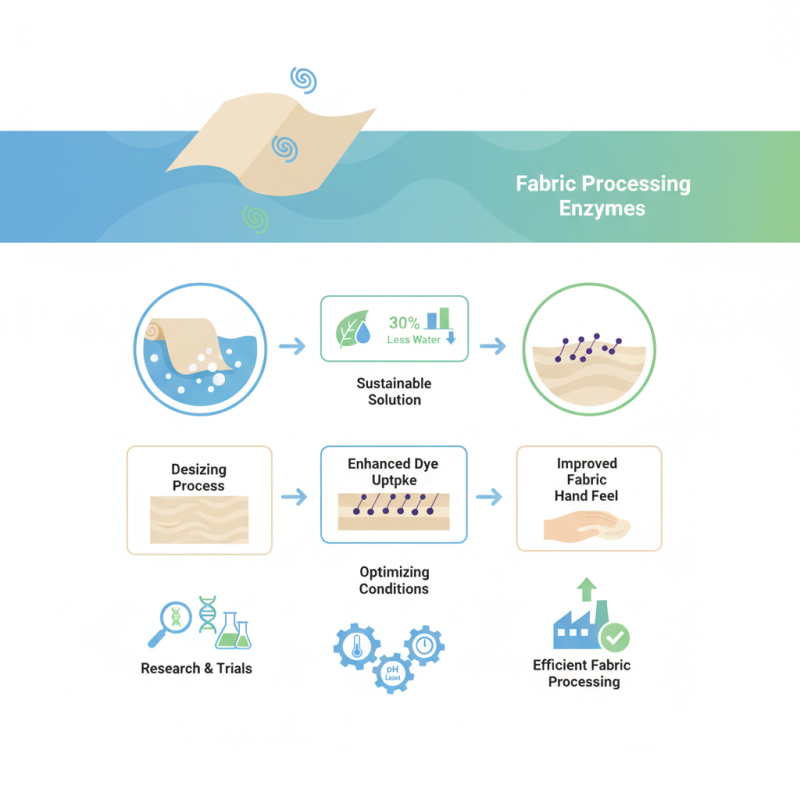
In the textile industry, the use of desizing enzymes has gained significant attention. This biocatalytic approach offers a sustainable solution for effective fabric processing. Recent reports indicate that enzymatic desizing can reduce water consumption by up to 30%, a substantial improvement in environmental impact. As the industry shifts towards greener practices, the adoption of these enzymes is becoming more critical.
desizing enzymes help remove starch-based sizing agents from fabrics. This process not only enhances dye uptake but also improves fabric hand feel. However, some manufacturers encounter challenges in enzyme application. Inconsistent quality and enzyme activity can affect results. Industry professionals must focus on optimizing these factors to achieve the best outcomes.
Employing the right conditions for desizing enzyme activity is crucial. Factors like temperature, pH, and time need careful consideration. Despite their benefits, not all enzymes perform equally. As a result, continuous research and trials are essential for achieving desired efficiency. A deeper understanding of enzyme performance will lead to better practices and outcomes in textile processing.
Understanding Desizing Enzymes in Fabric Processing
Desizing enzymes play a crucial role in fabric processing. These enzymes help remove sizing agents from textiles, which can make the fabric feel stiffer. The effectiveness of desizing enzymes depends on various factors, including temperature, pH, and the type of fabric being treated. Their use can significantly improve the quality of the final product.
Using desizing enzymes requires careful consideration. It’s essential to choose the right type of enzyme for your fabric. Different fabrics may respond differently to enzymes. Sometimes, the results may not meet expectations. In such cases, reviewing the conditions used can help. Maybe the temperature was too low, or the cleaning time was inadequate.
**Tips:** Always test a small fabric sample first. This way, you ensure compatibility. Consider the enzyme's concentration, too. Too little may not work, while too much could damage the fabric. Monitoring the pH is equally important. An unbalanced pH can lead to unwanted changes in fabric texture.
Experimentation is part of the process. Sometimes, results are not perfect. It might require several trials to achieve the desired finishing. Keeping detailed records of conditions used can help refine future attempts. Ultimately, the right balance can lead to more efficient fabric processing.
The Role of Desizing Enzymes in Textile Finishing
Desizing enzymes play a critical role in textile finishing. They help remove size materials from warp yarns effectively. This process is essential for achieving high-quality fabric. A recent industry report shows that using enzymes can improve fabric absorption by 30%. This enhances dye uptake and results in vibrant colors.
In addition to improving dyeing efficiency, desizing enzymes reduce water consumption. Traditional desizing methods often require large amounts of water and chemicals. Enzymatic desizing uses fewer resources, aligning with sustainable practices. Reports indicate that enzyme use can decrease water usage by up to 50%. This shift helps manufacturers meet environmental regulations while cutting costs.
Despite their advantages, the use of desizing enzymes is not without challenges. The enzyme effectiveness can vary based on material types and processing conditions. Some fabrics may not respond well to specific enzymes. This inconsistency requires careful consideration and testing. Manufacturers must continuously assess their processes to optimize enzyme use and ensure fabric quality.
Step-by-Step Guide to Using Desizing Enzymes Efficiently
Using desizing enzymes can streamline your fabric processing. Start by preparing the fabric. Ensure it is clean and free from any contaminants. A thorough washing helps improve enzyme effectiveness.
Next, choose the right enzyme. This depends on the fabric type. Some enzymes target specific starches or synthetic materials. Follow the manufacturer's directions carefully. Measure the required amount of enzyme accurately. It’s easy to over-consume, leading to inefficiencies.
Immerse the fabric in the enzyme solution. Maintain the temperature as recommended. Too low may not activate the enzyme. Too high could damage the fabric. Regularly check the progress; this helps avoid over-processing.
After treatment, rinse the fabric thoroughly. Ensure all residues are removed to prevent interference with subsequent processing. Lastly, evaluate the results. Look for any residual starch or uneven treatment. It may require adjustments in enzyme selection or processing time. Your observations will guide improvements for future batches.
Best Practices for Enzyme Application in Fabric Processing
In fabric processing, the application of desizing enzymes can greatly enhance efficiency and sustainability. Studies indicate that enzymes contribute to up to 30% savings in water and energy consumption during textile processing. However, optimizing enzyme application remains a challenge. Factors like temperature, pH, and enzyme concentration can significantly impact the desizing process. Poor adjustments in these parameters can lead to suboptimal performance and wasted resources.
Best practices in enzyme application focus on careful monitoring of these critical factors. Temperature should ideally be maintained around 60°C for effective results. Using a pH of 6.0 to 7.0 enhances enzyme activity, promoting a faster reaction with starch-based sizes. An effective concentration often falls between 0.5% and 2%. It’s vital to conduct preliminary tests to find the ideal mix for each specific fabric.
Moreover, operators should regularly review enzyme efficacy to address any performance issues. For instance, enzymes might not completely remove sizing agents, resulting in fabric quality defects. Continuous monitoring and adjustments can help identify these problems early. Proper training and awareness about enzyme interactions can turn initial imperfections into learning opportunities for process improvement.
Monitoring and Evaluating Fabric Quality Post-Desizing
Monitoring fabric quality after the desizing process is critical for ensuring optimal processing outcomes. A study found that nearly 20% of textiles fail quality checks post-desizing. This can result from ineffective enzyme usage, improper temperature, or inadequate reaction time. Understanding these variables is essential for textile manufacturers aiming for consistent quality.
To effectively evaluate fabric quality, key metrics should be monitored. These include tensile strength, color fastness, and surface smoothness. For instance, a 2021 industry report highlighted that fabrics treated with superior desizing enzymes showed a 15% improvement in tensile strength compared to traditional methods. Monitoring these factors can help manufacturers identify areas needing refinement.
Reflecting on the desizing process reveals some challenges. Inconsistent enzyme application may lead to uneven fabric treatment. This can cause issues like yellowing or uneven dye uptake later in the process. It's vital for manufacturers to learn from these experiences. A thorough understanding of enzyme behavior and fabric properties can lead to better outcomes and reduced waste. Continuous improvement is key in this evolving industry.