Top LED Outdoor Lighting Suppliers for Global Buyers
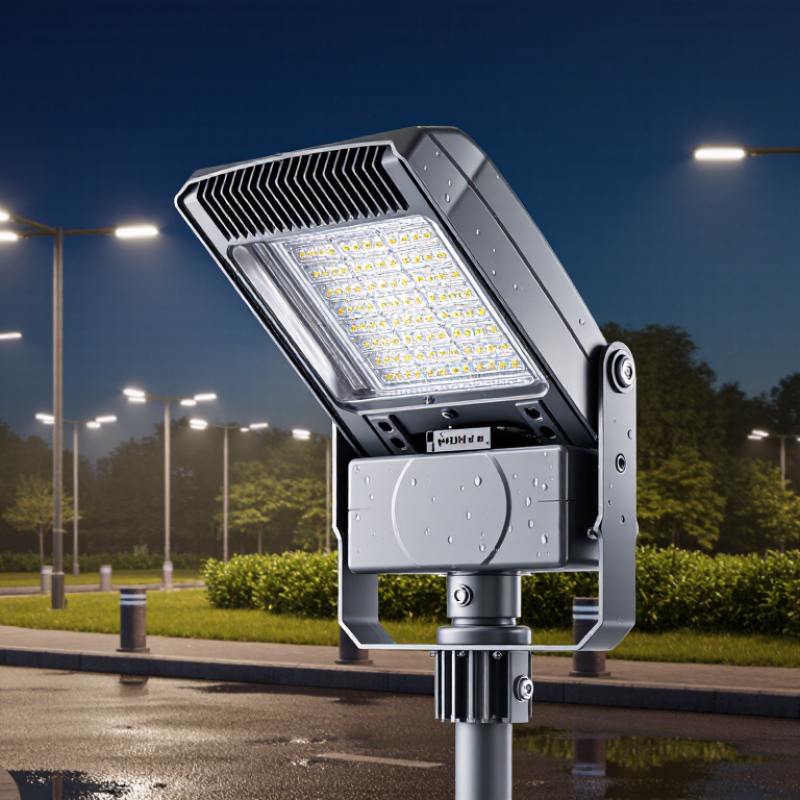
Choosing reliable Led Outdoor Lighting suppliers is more complex than comparing catalog prices. Global buyers must examine performance, certifications, delivery capacity, and after-sales support. A bright product photo proves very little. Real evaluation begins with the housing, driver, optics, and thermal management. These details decide whether a fixture survives rain, dust, vibration, and long operating hours.
This guide introduces leading outdoor lighting suppliers for international purchasing teams, contractors, and project owners. It considers manufacturing experience, quality-control procedures, customization ability, and communication reliability. Product samples should be tested in realistic conditions, including coastal air, winter temperatures, and uneven voltage. Supplier claims also deserve careful verification through test reports, warranty terms, factory audits, and customer references. Small gaps matter. A vague warranty can become an expensive problem.
Experienced buyers often request photometric files, ingress protection data, surge protection details, and documented lumen maintenance. They also check packaging before shipment, because damaged corners can delay an entire installation. Pricing remains important, but the cheapest quotation may not offer the lowest total cost. Energy efficiency, replacement access, spare parts, and installation labor should enter the calculation. Regional requirements can differ, so buyers should confirm applicable standards with qualified local professionals. No supplier is perfect. Even strong manufacturers may have uneven communication or limited support in certain markets. Careful comparison reduces that risk and supports safer, longer-lasting outdoor projects.
What Defines a Reliable LED Outdoor Lighting Supplier
Top LED Outdoor Lighting Suppliers for Global Buyers
A reliable LED outdoor lighting supplier offers more than bright fixtures and attractive prices. Their team should explain beam angles, color temperature, lumen output, and expected maintenance needs in clear language. Real project experience matters. Ask for installation photos, test reports, and references from similar climates. A supplier serving coastal areas should understand salt exposure, wind, moisture, and corrosion risks.
Quality evidence should be specific. Look for documented electrical safety testing, photometric data, ingress protection ratings, and consistent production records. Samples should match the final batch, including housing finish, cable quality, and light distribution. Reliable suppliers also communicate lead times honestly and explain replacement procedures before payment. Small details reveal professionalism. Delayed replies can become costly after installation.
Tips: Request one sample before placing a large order. Test it outdoors during rain, heat, and nighttime operation. Confirm warranty terms, spare-part availability, packaging strength, and shipping responsibilities. Do not rely only on certificates; verify their scope and validity. A supplier may meet laboratory requirements yet provide weak after-sales support. I have seen projects focus heavily on unit price and overlook maintenance access. That mistake can increase total costs. A careful supplier welcomes technical questions, records changes, and admits limitations instead of promising everything.
Top LED Outdoor Lighting Suppliers for Global Buyers - What Defines a Reliable LED Outdoor Lighting Supplier
| Evaluation Dimension | Reliable Supplier Benchmark | Verifiable Evidence | Why It Matters to Global Buyers | Relevant Standard or Reference |
|---|---|---|---|---|
| Ingress Protection | Outdoor luminaires should be selected with an enclosure rating appropriate to the installation; IP65 or higher is a common benchmark for exposed outdoor applications. | Complete IP test report identifying the exact product model, test configuration, laboratory, and test date. | Reduces the risk of dust ingress, water damage, corrosion, and premature failure. | IEC 60529 |
| Mechanical Impact Resistance | For locations exposed to vandalism, maintenance activity, or flying debris, the supplier should clearly state the IK rating; IK08 corresponds to a 5-joule impact level. | Impact-test report and product marking that correspond to the supplied housing and lens design. | Helps protect the luminaire from physical damage in public and industrial environments. | IEC 62262 |
| Photometric Performance | Published lumen output, wattage, luminous efficacy, beam angle, light distribution, and color temperature should be based on the complete luminaire rather than the LED package alone. | Independent photometric report, LM-79 test data, IES or equivalent lighting files, and a clear measurement method. | Allows accurate lighting design, energy calculations, and comparison between quotations. | IES LM-79; CIE measurement practices |
| LED Lifetime and Depreciation | Lifetime should be expressed with an operating condition and lumen-maintenance target, such as L70, rather than as an unsupported number of hours. | LM-80 data for the LED package plus a TM-21 or equivalent projection for the complete thermal design. | Supports realistic maintenance planning and total-cost-of-ownership analysis. | IES LM-80; IES TM-21 |
| Driver Quality and Electrical Safety | The driver should match the local voltage, frequency, dimming method, surge environment, and required power factor; protection features should be clearly documented. | Driver datasheet, safety report, power-factor data, total harmonic distortion data, surge-protection specification, and wiring diagram. | Improves compatibility, electrical safety, reliability, and system efficiency. | IEC 61347; IEC 60598-1; local electrical regulations |
| Thermal Management | The design should use a suitable heat sink, thermal interface, and enclosure for the declared ambient-temperature range and installation orientation. | Thermal test results, maximum ambient-temperature rating, internal temperature data, and installation instructions. | Controls light depreciation, driver stress, and premature component failure. | IEC 60598-1; manufacturer thermal test documentation |
| Color Quality and Consistency | The quotation should specify correlated color temperature, color-rendering index, chromaticity tolerance, and binning policy. Ra 70 or higher is a common outdoor functional-lighting benchmark, subject to project requirements. | Color-test report, chromaticity data, binning information, and sample approval process. | Prevents visible color differences between batches and ensures suitability for the application. | CIE colorimetry practices; project lighting specification |
| Environmental Compliance | Products should be supported by documentation required for the destination market, including restricted-substance declarations and applicable conformity information. | Material declarations, restricted-substance test reports, conformity documentation, and a documented compliance process. | Reduces customs, regulatory, disposal, and project-approval risks. | RoHS; REACH; destination-market requirements |
| Quality Management | A controlled manufacturing process should include incoming-material inspection, in-process checks, final testing, traceability, and corrective-action procedures. | Quality manual, inspection records, sample test reports, calibration records, and valid quality-management certification where applicable. | Improves batch consistency and makes nonconformities easier to investigate. | ISO 9001 principles; factory quality-control records |
| Warranty and After-Sales Support | Warranty terms should define coverage period, exclusions, replacement or repair procedure, evidence requirements, and responsibility for shipping or labor. | Signed warranty document, spare-parts policy, service-response process, and clearly identified support contacts. | Provides a practical remedy when failures occur after installation. | Contract terms; project-specific service-level requirements |
| Supply Capacity and Traceability | The supplier should provide realistic production capacity, component availability, batch identification, packaging controls, and documented change-notification procedures. | Production schedule, approved-bill-of-materials process, lot codes, packing specifications, and change-control records. | Reduces delivery delays and helps maintain product consistency across repeat orders. | Purchase contract; internal traceability and change-control procedures |
| Lighting Design and Documentation | A capable supplier should provide accurate technical drawings, installation instructions, photometric files, wiring information, maintenance guidance, and product-change notifications. | Current datasheets, CAD files, photometric files, installation manuals, compliance documents, and controlled revision numbers. | Enables correct specification, installation, inspection, and future maintenance. | Project specification; document-control best practice |
Related Posts
-

Ultimate Outdoor Lighting Tips for a Stunning Backyard Makeover
-

Explore the Future of Outdoor Lighting Fixtures at the 138th Canton Fair: A Global Gathering of Innovation
-

Top 10 Outdoor Lighting Fixture Manufacturers from China at the 137th Canton Fair
-
China Top 10 Outdoor Lighting Fixtures Suppliers?
-

Discover the Future of Outdoor Illumination with Innovative Exterior Led Light Fixtures
-

7 Smart Tips for Choosing the Best Led Outdoor Lighting Solutions