What Are the Top Commercial Lighting Types in 2026?

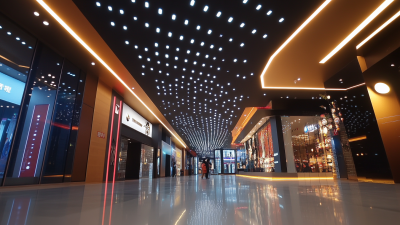
Commercial Lighting is entering 2026 with a stronger focus on efficiency, visual comfort, and measurable performance. Businesses are no longer choosing fixtures based only on brightness or purchase price. A grocery aisle, hotel lobby, and warehouse each demand different light distribution, color quality, and control strategies. The right system should support daily work while reducing glare, maintenance visits, and unnecessary energy use.

LED remains the central technology, but its applications continue to diversify. High-bay fixtures serve tall warehouses and manufacturing floors. Linear systems create clean, even illumination across offices and retail spaces. Downlights, track lights, and panel lights offer flexible solutions for ceilings, displays, and customer areas. Outdoor wall packs and area lights improve visibility around entrances, loading zones, and parking facilities. Smart controls add occupancy sensing, daylight harvesting, and scheduled dimming. These features can produce savings, but only when they are commissioned properly.

Field experience shows that installation quality often matters as much as fixture selection. A technically advanced product can disappoint when glare, mounting height, or control settings are ignored. This guide examines the leading Commercial Lighting types expected to shape 2026 projects. It considers practical use, operating costs, maintenance, and user comfort. Some forecasts may age badly. Technology changes quickly, and product claims deserve careful verification. Still, comparing real applications and recognized performance standards can help facility managers make more dependable decisions. The best choice is rarely the newest fixture. It is the one that performs consistently in its actual environment.
What Are the Top Commercial Lighting Types in 2026?

Commercial Lighting Types: Scope, Purpose, and Selection Criteria

Commercial lighting in 2026 is not one universal solution. LED panels suit offices, clinics, and classrooms with low-glare, even illumination. Linear fixtures work well above long counters or warehouse aisles. High-bay lights serve tall industrial spaces, while track lighting directs attention toward displays, artwork, or product shelves. Exterior wall packs and area lights improve visibility around entrances and loading zones.

Purpose should guide every choice. A retail aisle may need accurate color rendering, while a storage room may prioritize durability and efficient coverage. Offices often benefit from controlled brightness, reduced glare, and occupancy sensors. Selection also depends on ceiling height, mounting method, operating hours, maintenance access, moisture, and local energy requirements. Check measured light levels, not only catalog claims. A fixture can look efficient on paper and still create uncomfortable shadows.

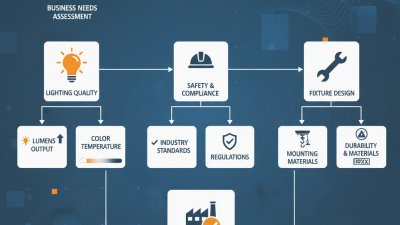
Tips: Compare lumen output, beam angle, color quality, flicker performance, warranty terms, and control compatibility. Test a small area during working hours. Observe reflections on screens and polished floors. Do not ignore maintenance; a difficult-to-reach fixture can increase long-term costs. My practical concern is that smart controls are sometimes specified before basic lighting needs are understood. That approach can fail. Start with the space, occupants, and task, then select the technology. Perfect lighting rarely exists, and even a careful design may need adjustment after installation.

Top Commercial Lighting Types in 2026

Comparison of representative luminous efficacy values for major commercial lighting technologies. Higher efficacy generally means more light output per watt, although application, color quality, controls, maintenance, and installation conditions should also guide selection.

Representative typical efficacy values: LED 130 lm/W, high-intensity discharge 110 lm/W, fluorescent 85 lm/W, induction 75 lm/W, and halogen 20 lm/W. Actual performance varies by fixture design, lamp, ballast or driver, optics, and operating conditions.

LED Lighting: The Leading Choice for Commercial Spaces

LED lighting has become the leading choice for commercial spaces in 2026. It uses less energy than older fluorescent systems and usually lasts much longer. In busy offices, retail stores, and warehouses, that means fewer replacements and less disruption. LED fixtures also provide steady illumination, which helps reduce dark corners and visual fatigue. However, brightness alone is not enough. A poorly selected LED can create harsh glare, uneven shadows, or an uncomfortable blue tone.

From practical planning experience, the best results come from matching the fixture to the space. Offices often need controlled, low-glare panels. Warehouses may require high-bay fixtures with wide, consistent coverage. Retail areas can benefit from adjustable lighting that reveals product colors accurately. Check color rendering, beam angle, dimming performance, and heat management before purchasing. Confirm that installation meets local safety and energy requirements. Small details matter. A cheaper fixture may produce flicker or fail earlier than expected, although specifications do not always reveal this risk.

Tips: Measure the work area first. Test one fixture before a full installation. Compare light levels at desk height, shelf height, and floor level. Choose occupancy sensors for rooms used occasionally. Clean lenses regularly, because dust quietly reduces output. Review glare after installation, not only on paper. LED is efficient, but efficiency does not fix poor design.

Linear, Panel, and Troffer Lighting Systems

What Are the Top Commercial Lighting Types in 2026?
Linear, Panel, and Troffer Lighting Systems

Commercial lighting in 2026 focuses on flexible layouts, lower energy use, and better visual comfort. Linear lighting works well in open offices, retail aisles, and long corridors. Its continuous form guides movement and creates a clean ceiling line. Suspended linear systems can also place light closer to desks, reducing dark areas.

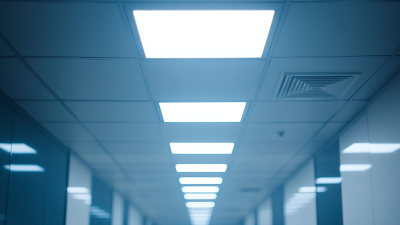
Panel lighting remains practical for offices, classrooms, and healthcare spaces. Slim panels fit standard ceiling grids and spread light evenly across work surfaces. Choose panels with low glare ratings, accurate color rendering, and adjustable color temperature when tasks change. Bright is not always better. Excessive brightness can cause screen reflections and eye fatigue.

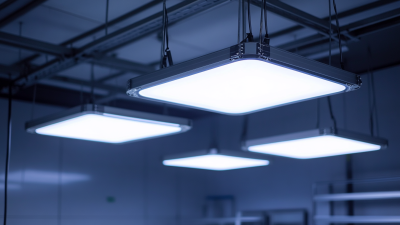
Troffer systems continue to serve large ceiling areas efficiently. Modern versions often use improved optical controls, occupancy sensors, and daylight response. They can replace older fluorescent fixtures with less maintenance and more consistent output. A careful site review matters. Ceiling height, surface colors, window direction, and furniture layout all affect performance. In real projects, a technically efficient fixture can still feel uncomfortable when spacing is poorly planned.

A common mistake is selecting one lighting type for every room. Linear fixtures may feel too directional in small spaces. Panels may look flat in areas needing visual rhythm. Troffers can appear repetitive without thoughtful zoning. Review photometric data, mock up a sample area, and verify local electrical and accessibility requirements before installation. Small adjustments often matter.

What Are the Top Commercial Lighting Types in 2026? - Linear, Panel, and Troffer Lighting Systems

A practical comparison of commonly specified commercial LED lighting systems

Evaluation Dimension Linear Lighting Systems LED Panel Lighting LED Troffer Lighting
Typical form factor Continuous strips, suspended lines, surface-mounted channels, or recessed linear modules Flat rectangular fixtures, commonly sized to replace 2 × 2 ft or 2 × 4 ft ceiling modules Recessed fixtures designed for standard modular ceilings, commonly 2 × 2 ft or 2 × 4 ft
Typical input power 20–80 W per fixture section, depending on length and light output 25–50 W for common 2 × 4 ft commercial panels 25–60 W for common 2 × 2 ft and 2 × 4 ft troffers
Typical delivered efficacy Approximately 90–150 lm/W Approximately 90–140 lm/W Approximately 100–160 lm/W
Typical light output About 2,000–12,000 lumens per fixture or continuous section About 3,000–6,500 lumens for a typical 2 × 4 ft panel About 3,000–8,000 lumens for a typical 2 × 4 ft troffer
Common color temperatures 3000 K, 3500 K, 4000 K, and 5000 K 3500 K, 4000 K, and 5000 K 3500 K, 4000 K, and 5000 K
Typical color rendering CRI 80+; CRI 90+ options are commonly available CRI 80+; CRI 90+ options are available for design-focused spaces CRI 80+; higher-CRI versions are available for offices, healthcare, and education
Rated service life Typically 50,000–100,000 hours, depending on thermal design and operating conditions Typically 50,000–100,000 hours Typically 50,000–100,000 hours
Glare control Depends on lens, diffuser, optics, and suspension height; indirect designs can reduce visual glare Diffused light provides broad distribution; low-glare and microprismatic versions are available Optical louvers, lenses, and recessed geometry can provide strong control of brightness and glare
Installation requirements Surface, suspended, or recessed installation; continuous runs require layout and connection planning Recessed, surface-mounted, or suspended installation; generally lightweight and quick to install Best suited to compatible suspended ceilings; retrofit kits can adapt existing fluorescent housings
Best-fit applications Open offices, corridors, retail spaces, warehouses, architectural interiors, and continuous task areas Open-plan offices, classrooms, healthcare areas, meeting rooms, and general commercial interiors Offices, schools, hospitals, public buildings, and facilities with existing modular ceiling grids
Controls compatibility Often compatible with dimming, occupancy sensors, daylight harvesting, and addressable control systems Commonly available with 0–10 V dimming, occupancy sensing, daylight sensing, and emergency options Commonly compatible with 0–10 V dimming, wireless controls, occupancy sensors, and daylight harvesting
Main design advantage Flexible geometry and strong visual continuity across large or irregular spaces Uniform, comfortable illumination with a clean, minimalist ceiling appearance Efficient replacement for fluorescent troffers with good ceiling integration and optical control
Primary selection consideration Confirm mounting method, continuous-run layout, optical distribution, and emergency-lighting requirements Compare lumen maintenance, diffuser quality, glare rating, ceiling compatibility, and driver performance Verify ceiling-grid dimensions, retrofit compatibility, glare requirements, and access for maintenance
Data note: Performance figures are representative specification ranges for commercial LED systems and vary by fixture size, optical design, operating temperature, driver, and control configuration.

High-Bay, Low-Bay, and Industrial Lighting Solutions

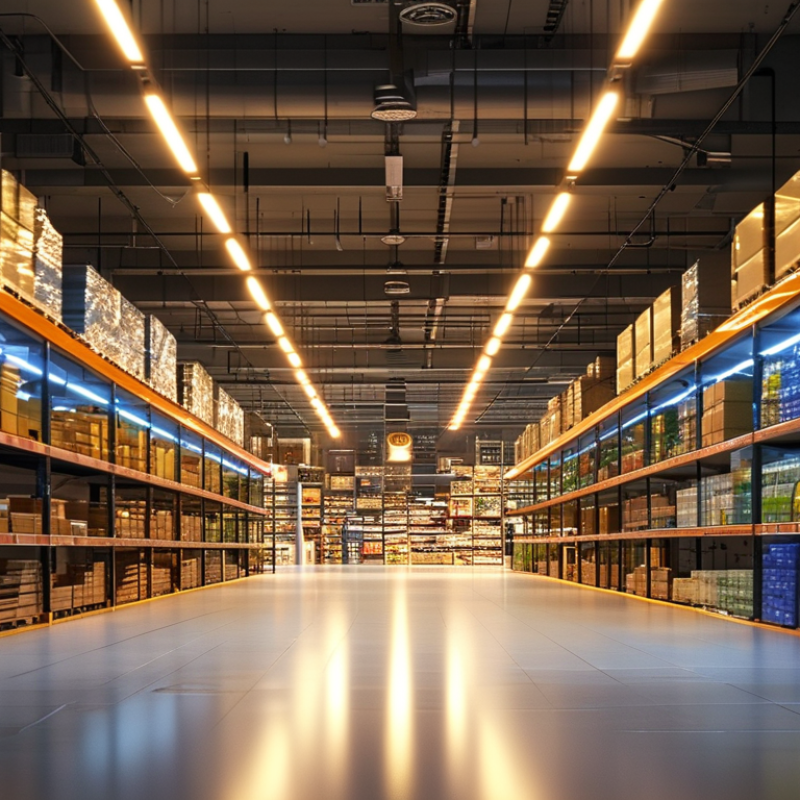
Commercial lighting in 2026 is less about brightness alone. Ceiling height, task detail, energy use, and maintenance access shape the decision. High-bay lighting suits warehouses, aircraft hangars, and distribution halls with ceilings above roughly six meters. Focused optics place light on aisles and work zones, reducing dark patches between racks. Poor beam selection still creates glare. That mistake is costly.

Low-bay lighting fits workshops, retail storage areas, and production rooms with lower ceilings. Wider light distribution can support safer movement and clearer bench work. In practical site assessments, mounting height matters as much as fixture output. A bright unit installed too low may strain workers’ eyes. Occupancy sensors and daylight controls can reduce unnecessary operating hours, especially near skylights or loading doors.

Industrial lighting solutions need stronger protection than ordinary commercial fixtures. Dust, moisture, vibration, heat, and cleaning chemicals can shorten service life. Specifiers should check enclosure ratings, thermal performance, color quality, and access for replacement work. High-temperature areas may need remote drivers or specialized housings. Emergency lighting also requires careful coordination with local safety rules. I have seen layouts that looked efficient on paper but left inspection points dim. A final walkthrough, with shelves stocked and machines running, often reveals what calculations miss.

Smart, Sustainable, and Specialized Commercial Lighting in 2026

Commercial lighting in 2026 is moving beyond simple brightness. Smart LED systems now combine occupancy sensors, daylight response, and wireless controls. In a busy office, lights can dim near a sunlit window while remaining brighter above a meeting table. Facility teams can review energy data through a central dashboard. Small adjustments often reveal large savings.

Sustainability also depends on practical design. High-efficiency fixtures, longer service life, and replaceable components can reduce waste. Tunable white lighting supports changing tasks, from focused morning work to calmer afternoon activities. However, automated controls are not always perfect. I have seen sensors misread empty rooms when glass partitions reflect movement. Careful commissioning and regular testing remain essential.

Specialized lighting serves spaces with distinct safety and visual needs. Warehouses benefit from high-bay fixtures with precise beam control. Retail areas need accurate color rendering for products and materials. Healthcare environments require low-glare illumination and dependable emergency operation. Outdoor commercial sites may use adaptive controls to reduce unnecessary nighttime light. Qualified professionals should verify illuminance, glare, wiring, and maintenance access against applicable standards. Cybersecurity also deserves attention when lighting networks connect with building systems. A cheaper installation can become expensive when software, sensors, or replacement parts are overlooked. Clear records help teams make better decisions. There is still room for improvement.