What is a Switching Power Supply and How Does it Work?
The world of electronics heavily relies on a vital component: the Switching Power Supply. Renowned expert Dr. Emily Tran once stated, "A Switching Power Supply is the backbone of modern electronic devices." Understanding its function is essential for anyone in the industry.
These power supplies convert electrical power efficiently. They handle voltage changes without generating excessive heat. This efficiency makes them ideal for computers, smartphones, and other devices. Yet, despite their importance, many users remain unaware of their inner workings. The complexity can be daunting, but grasping the basics is rewarding.
Switching Power Supplies usually consist of a switching element, control circuit, and transformer. It's fascinating how these elements interplay to provide stable output. However, the transition from traditional power supplies can be a challenge. Some drawbacks exist, like electromagnetic interference and design complexity. Reflecting on these aspects can help improve future technologies.
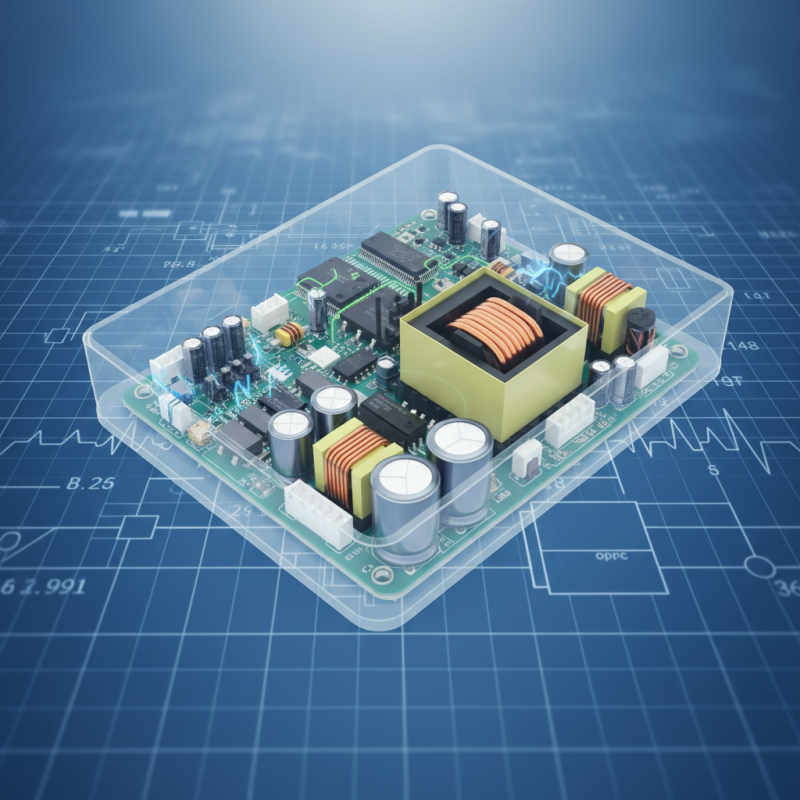
What is a Switching Power Supply? An Overview of Key Concepts
A switching power supply is a vital component in many electronic devices. It converts electrical power efficiently. Unlike traditional power supplies, it uses high-frequency switches. These switches control the power flow and minimize energy loss. The result is a more compact and lightweight design.
Key concepts include the role of inductors and capacitors. Inductors store energy temporarily. They release it when needed. Capacitors smooth out the voltage, ensuring stability. This balance is crucial for sensitive electronics.
Despite its benefits, the technology has flaws. Noise can be an issue. It may interfere with other devices. Additionally, heat generation needs careful management. Engineers must continuously assess these factors. Improving efficiency while reducing complications is ongoing work.
What is a Switching Power Supply and How Does it Work?
| Parameter | Description | Typical Values |
| Input Voltage | The voltage supplied to the power supply. | 100-240V AC |
| Output Voltage | The voltage delivered to the load. | 5V, 12V, 24V |
| Efficiency | The ratio of output power to input power. | 80-95% |
| Switching Frequency | The frequency at which the power supply switches. | 20kHz - 100kHz |
| Regulation | Ability to maintain output voltage within specified limits. | ±5% to ±10% |
| Load Regulation | Variation in output voltage with changing load current. | ±1% to ±3% |
| Ripple Voltage | AC voltage variation on the output DC voltage. | <50 mV |
The Working Principles of Switching Power Supplies Explained
Switching power supplies are essential components in modern electronics. They convert electrical power efficiently. The working principle involves switching elements like transistors. These elements turn on and off rapidly to regulate output voltage. This method minimizes energy loss, making them more efficient than linear power supplies.
According to a report by the International Energy Agency, switching power supplies can achieve efficiencies over 90%. This high efficiency comes from their ability to optimize energy conversion. However, they can introduce noise into circuits. This noise may require additional filtering. Design challenges include managing heat and ensuring stability during load changes.
Switching power supplies also use magnetic components. Transformers and inductors play a key role. They store energy temporarily and release it smoothly. Yet, the size and weight of these components can limit design flexibility. Balancing efficiency with size often requires careful consideration. The result is a complex interplay of technology and engineering.
Types of Switching Power Supplies: Buck, Boost, and Buck-Boost
Switching power supplies are essential in modern electronics. They can efficiently convert electrical power. The three main types are buck, boost, and buck-boost converters. Each type serves a unique purpose in voltage regulation.
Buck converters lower voltage. They take a higher input and reduce it to a desired level. This type is widely used in applications like battery chargers. If you need to convert 12V to 5V, a buck converter is a great choice. Keep in mind, though, efficiency can drop if not properly managed. It’s vital to consider heat dissipation when using these converters.
Boost converters do the opposite. They increase voltage from a lower level to a higher one. This is useful in devices requiring more power than the available supply. For instance, boosting 5V to 12V for certain LED applications requires careful design. A tip here is to look out for component ratings. Underestimating requirements can lead to failures.
Buck-boost converters are versatile. They can increase or decrease voltage based on needs. These are perfect for systems with fluctuating power source levels. However, users must ensure they understand the load conditions. Improper setup may lead to instability in output voltage. Thus, testing under real load conditions is crucial.
Efficiency Ratings: Understanding the Performance of Switching Power Supplies
Efficiency ratings are crucial for evaluating switching power supplies. These ratings indicate how much input power is converted into useful output power. A high efficiency rating means less wasted energy and lower heat generation. It is common to see ratings expressed as a percentage. A unit with 90% efficiency converts 90 watts out of every 100 watts it consumes into usable energy.
Understanding these ratings helps users make informed choices. It’s essential to consider not only the initial cost but also long-term savings on electricity bills. Higher efficiency can lead to reduced operational costs over time. However, not all power supplies are created equal. Some might advertise high efficiency but fail to deliver consistent performance. This inconsistency can lead to wasted energy and potential damage in high-load situations.
Real-world factors also affect efficiency. Ambient temperature, load variations, and quality of components play significant roles. It's not uncommon for a power supply to perform well under certain conditions but falter in others. Careful consideration of these aspects can lead to better decision-making when selecting a switching power supply for specific applications.
Applications and Benefits of Switching Power Supplies in Modern Electronics
Switching power supplies have become a cornerstone of modern electronics. Their applications are vast, ranging from consumer devices to industrial machinery. These power supplies can efficiently convert electrical energy, making them integral for today’s technology. Reports suggest that the global switching power supply market is expected to grow significantly, driven by the increasing demand for energy-efficient solutions.
One significant advantage is their compact size. They can deliver high power in a small form factor, which helps in reducing overall device size. Many smartphones and laptops rely on these supplies for optimal performance. Moreover, they often have higher power conversion efficiency, typically around 80-90%. This results in less heat generation, extending the lifespan of devices.
Tips: When designing circuits, consider the layout. A good layout can optimize efficiency.
Despite their benefits, switching power supplies come with challenges. Electromagnetic interference (EMI) is a common issue. Designing for EMI reduction requires attention to component selection and arrangement. It’s a subtle balance. This needs careful testing and iteration.
Tips: Use shielded components to help reduce noise. Regular testing is crucial.