What Is an LED Lighting Solution for Global Buyers?
For global buyers, Led Lighting Solutions mean more than selecting bright, attractive fixtures. They combine LEDs, drivers, controls, optical design, installation planning, and long-term service. A reliable solution should fit the project’s voltage, climate, mounting method, and operating schedule. It should also support clear documentation, consistent quality, and responsible supplier communication.
A warehouse in Singapore may need corrosion resistance and strong heat management. A retail store in Germany may prioritize color accuracy, dimming, and visual comfort. A rural project may depend on simple maintenance and dependable spare parts. These differences make product evaluation practical, not theoretical. Buyers should review lumen output, efficacy, color temperature, color rendering, beam angle, lifetime testing, warranty terms, and driver performance. Independent test reports can strengthen confidence, although paperwork alone does not prove field performance.
Good decisions usually come from comparing measured data with real installation experience. Ask how the product performs after thousands of operating hours, not only how it looks in a showroom. Check whether suppliers explain limitations openly. No fixture fits every market. That is the difficult part. A specification can appear complete while ignoring dust, humidity, control compatibility, or local maintenance skills. Global buyers should therefore balance energy savings with safety, usability, supply stability, and total ownership cost. Expert guidance helps, but careful questions matter too. The strongest Led Lighting Solutions are transparent, adaptable, and tested against the conditions they must actually serve.
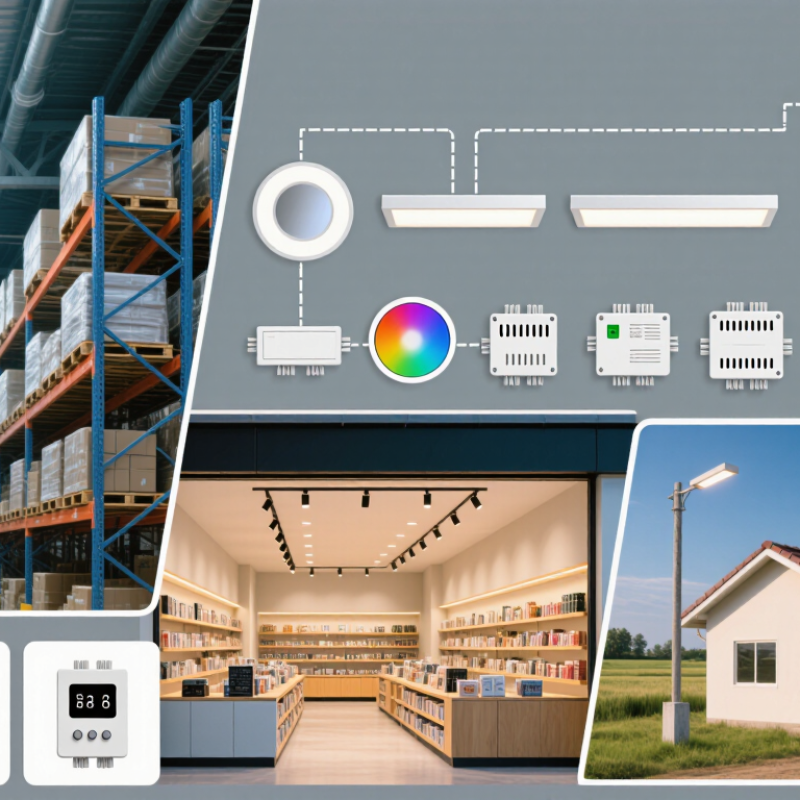
Defining LED Lighting Solutions for Global Buyers
For global buyers, an LED lighting solution is more than a lamp or fixture. It is a coordinated package of luminaires, drivers, optics, controls, documentation, and practical support. The aim is consistent light, manageable energy use, and dependable operation in a specific space. A warehouse may need broad, uniform illumination; a hotel corridor may need softer, controlled light. Details matter.
A useful definition includes both performance and supply. Buyers should compare lumen output, efficacy, color temperature, color rendering, glare control, and rated lifetime. Check whether the driver, dimming method, and sensor options suit the site’s electrical setup. Ask for test reports, installation guidance, warranty terms, and replacement-part availability. Requirements differ by destination, so confirm applicable product and documentation requirements with qualified local professionals. A specification can look complete yet overlook installation or maintenance. That is easy to miss.
Tips: Request a sample and test it in the actual room before ordering at scale. Compare measured results, not just catalog claims. Record mounting height, operating hours, ambient temperature, and control settings; these affect real-world performance. If one detail remains unclear, pause and ask.
Key Components and Technologies in LED Lighting Systems
An LED lighting system is more than a lamp. It combines LED packages, a driver, optics, thermal components, and sometimes sensors or controls. Each part affects performance. The driver converts incoming power into a stable current; optics direct light onto a workbench, aisle, or road. Heat matters, too: a compact fixture with poor heat removal can lose output sooner than expected. Check lumen output, efficacy in lumens per watt, color rendering, and correlated color temperature together.
The International Energy Agency’s Energy Efficiency 2023 report notes that LEDs represented about 50% of global lighting sales in 2022. That shift makes system quality more important, not less. A high-efficacy chip cannot compensate for an inefficient driver or badly matched lens. Look for test data covering the complete luminaire, including output, power use, and dimming behavior. Small details count.
Controls can include occupancy sensors, daylight response, and scheduled dimming. They may reduce wasted operating hours, but only when settings suit the room. The U.S. Department of Energy’s LED guidance describes LED products as using at least 75% less energy and lasting up to 25 times longer than incandescent lighting. Treat those figures as comparisons, not guarantees for every installation. Dust, heat, switching frequency, and driver quality change real-world results. A specification sheet rarely shows the whole story.
LED Product Standards, Certifications, and Market Requirements
For global buyers, an LED lighting solution is more than a lamp and its stated wattage. Product standards, test reports, and market approvals help show whether a fixture is safe and suitable for its destination. Check the exact model number on every document. A report for a similar-looking product may not cover its driver, housing, or dimming function. Details matter.
Safety and electromagnetic compatibility requirements vary by market and product category. Buyers commonly review applicable IEC test reports, regional conformity documents, and restrictions on hazardous substances. A certificate alone is not enough; confirm its issuing body, validity, and product scope. For example, a report should match the fixture’s voltage range and intended installation. Ask for photometric files, too, such as an IES file, and compare beam angle and color temperature with the project specification. Small discrepancies can change a room’s appearance.
Market requirements may also include energy labels, packaging information, plug types, warranty terms, and local-language instructions. Confirm these before production, not after cartons arrive at a port. Markets differ. I have seen procurement plans become messy when teams treat one approval as universal. That assumption deserves a second look. Requirements can change, and building codes may add conditions beyond product certification. When uncertainty remains, verify the current rules with a qualified local testing or compliance professional.
How to Evaluate LED Suppliers, Quality, and Total Cost
For global buyers, evaluating an LED supplier starts with clear, comparable specifications.
Put wattage, light output, color temperature, beam angle, and dimming requirements in writing. Ask for current test reports and confirm that their scope matches the exact product offered. Ask for proof. A report for a similar model is not the same evidence.
Request production samples and inspect them under consistent conditions. Compare color across several units, check connector fit, and note flicker or uneven light. Details matter. Ask how the supplier handles failed units, replacement parts, and warranty claims. Confirm whether the warranty covers labor or only components. A polished sample cannot guarantee every production batch; that gap deserves attention. Factory checks and shipment inspections can reduce surprises, though they add time and cost.
Compare total cost, not just the unit price. Include energy use, expected service life, installation labor, shipping, spare parts, and likely replacement frequency. A lower-priced fixture may cost more if it needs frequent repairs or consumes more power. Request assumptions behind lifespan and savings estimates, then test them against your own operating hours. No scorecard catches everything. A spreadsheet may still miss a delayed shipment or an unclear return process. Leave room for judgment, and record what remains uncertain before committing to a large order.
Selecting and Implementing the Right Global LED Lighting Solution
What Is an LED Lighting Solution for Global Buyers?
Selecting and Implementing the Right Global LED Lighting Solution
A global LED purchase should begin with site conditions, not a catalog’s wattage. The International Energy Agency estimates lighting accounts for about 15% of global electricity use. Yet one fixture rarely suits a loading bay, office, and cold-storage aisle. Record ceiling height, operating hours, ambient temperature, target light levels, and existing controls before comparing bids.
Compare measured lumen output, efficacy, beam distribution, color rendering, glare, dimming range, and driver compatibility. The U.S. Department of Energy reports that LEDs use at least 75% less energy than incandescent lamps. Its guidance notes that some LEDs last up to 25 times longer. These figures are not project guarantees. Heat, frequent switching, dust, and difficult maintenance access can affect service life. Review photometric files and warranty terms, then request samples for an on-site mock-up.
For multi-country deployments, check supply voltage and frequency, connector types, control protocols, spare-part availability, and local technical requirements. Pilot a representative zone through a full work cycle. Measure power use and light levels, and collect staff feedback before adjusting the layout or controls. Test before scaling. A short pilot may miss seasonal heat or unusual cleaning routines. That gap is worth documenting; it can make the next purchasing decision more dependable.