How to Find China Top Sound Activated Light Suppliers?
Finding China’s top Sound Activated Light suppliers requires more than comparing online listings. A polished product page can hide inconsistent quality, unclear specifications, or limited production experience. Reliable sourcing begins with a clear product brief, including sound sensitivity, lighting modes, power supply, installation method, housing material, and target application.
Ask suppliers for factory details, product samples, test reports, and recent project references. A serious manufacturer should explain how its lights detect rhythm, voice, or environmental sound. Request close-up photos of circuit boards, connectors, vents, and finished housings. These details often reveal production discipline. Confirm whether the supplier controls manufacturing or outsources critical assembly. Factory audits, video inspections, and independent quality checks can provide stronger evidence than sales claims.
Check communication quality, lead times, packaging protection, warranty terms, and after-sales support. Discuss sampling before placing a large order. Test the light in a quiet room, a busy retail space, and a normal home environment. Record response delays, false triggers, heat, brightness, and noise. Small differences matter. Compliance documents should match the actual model and destination market. Do not accept generic certificates without verification.
No sourcing method is perfect. I have seen attractive samples fail during extended testing, while less polished suppliers delivered steadier results. That is why supplier evaluation should combine technical evidence, direct communication, and repeat inspections. The best choice is not always the cheapest factory. It is the partner that explains limitations honestly, improves after feedback, and maintains consistent Sound Activated Light performance from sample to shipment.
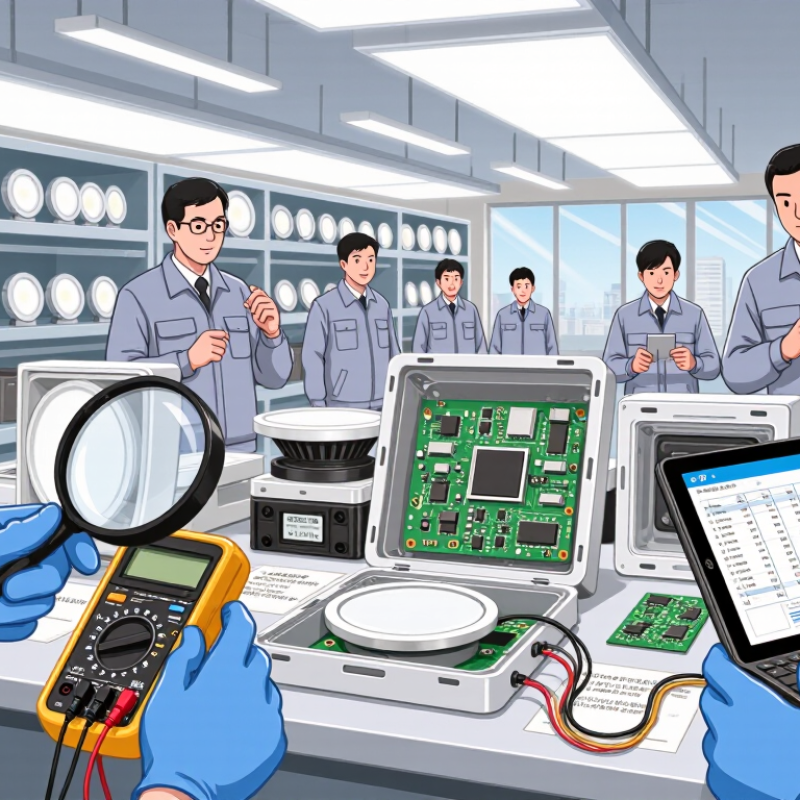
Understanding Sound Activated Lights and Their Supplier Requirements
Sound activated lights combine LEDs, a microphone, and control software. They respond to claps, music, footsteps, or sudden noise. Supplier requirements therefore extend beyond brightness and color options.
A capable supplier should explain microphone sensitivity, trigger distance, response time, and false-trigger control. Ask for sample testing in quiet rooms, workshops, and crowded spaces. Indoor models may need different acoustic tuning than outdoor models. Also request photometric data, flicker results, thermal tests, and production inspection records. The International Energy Agency reports that lighting consumes about 15% of global electricity. Efficient LEDs and accurate activation can reduce unnecessary operating time. However, sound activation does not automatically guarantee energy savings. Poor calibration may switch lights on too often.
Look for suppliers with clear quality systems, traceable components, stable LED bins, and documented safety testing. A factory audit can reveal more than attractive product photos. Check sample consistency across several units. One sample proves little. Grand View Research has reported strong double-digit growth in the smart lighting market, increasing pressure for faster customization and reliable after-sales support. Still, market growth alone does not prove manufacturing competence.
Tips: Define the sound environment before requesting quotations. Share room size, noise levels, installation height, voltage, color temperature, and expected service life. Request three samples, not one. Compare trigger accuracy, delay, heat, and unwanted activation. A supplier that avoids test details deserves careful review. You may also need to revise your first specification after real-world testing.
Identifying China’s Main Sources for Sound Activated Light Suppliers
China’s main sources for sound activated light suppliers are concentrated in Guangdong, Zhejiang, and Jiangsu. Guangdong offers dense LED, sensor, molding, and electronics supply chains. Zhongshan and Shenzhen are useful starting points for factory audits. Zhejiang often provides strong hardware and export experience. Jiangsu can support larger electronic assemblies and testing services.
The IEA’s 2024 Energy Efficiency Market Report states that LED lighting has exceeded half of global lighting sales in many markets. UN Comtrade data for HS 9405 also shows China remains a leading exporter of lighting equipment. However, these figures do not isolate sound activated products. That limitation matters. A supplier may export large lighting volumes without understanding microphone sensitivity, false triggering, or acoustic testing. Ask for production records, sensor specifications, sample test videos, and quality certificates. Check whether the factory controls assembly or outsources it.
Tips: Compare at least three factories from different production clusters. Test the same unit near footsteps, speech, and machinery. Request a 30-day sample review. Confirm response distance, standby power, operating temperature, and enclosure material. A supplier’s catalog can look excellent, yet the sensor may react poorly in a real hallway. I would also inspect solder joints and wiring personally when possible. Photos are helpful, but they are not proof.
Comparing Supplier Products, Certifications, and Production Capabilities
How to Find China Top Sound Activated Light Suppliers?
Comparing products is more useful than trusting attractive catalogs. Test sound activation in a real room, not only a quiet showroom. Check response distance, trigger volume, brightness, color temperature, and delay time. A light that reacts to clapping may miss lower voices or background music. Ask for samples with identical settings. Small differences matter.
Certifications need careful checking. Request current CE, RoHS, FCC, or applicable market documents, then verify the issuing laboratory and report number. A certificate should match the exact model, not a similar housing. Review electrical safety, electromagnetic compatibility, battery protection, and material declarations. I have seen suppliers provide impressive files with unclear product references. That deserves a second look.
Production capability shows whether samples can become reliable shipments. Ask about SMT equipment, sensor calibration, aging tests, incoming inspection, and final functional testing. Visit the factory when possible, or use an independent audit. Check whether each unit receives a serial number and whether failed units are recorded. Ask for a pilot run before confirming large quantities. Production can look organized during an online tour, yet manual rework may remain hidden. That is an uncomfortable gap. A dependable supplier should explain it clearly, including corrective actions, lead times, minimum order quantities, and quality limits.
Checking Supplier Reliability, Pricing, Samples, and Communication
How to Find China Top Sound Activated Light Suppliers?
Supplier reliability should be measured through evidence, not polished product photos. Request business licenses, factory audit records, quality procedures, and recent production references. ISO 9001 certification helps, but it does not guarantee every batch is consistent.
Ask for test data covering microphone sensitivity, trigger distance, false activation, and repeated switching. Test it yourself. A sample should run in a noisy room, a quiet bedroom, and near moving equipment. These conditions reveal weaknesses that brochures often hide.
Pricing needs a complete breakdown. Compare unit cost, minimum order quantity, tooling, packaging, shipping, and spare parts. The cheapest quote may create expensive failures later.
The U.S. Department of Energy reports that LEDs use at least 75% less energy and last up to 25 times longer than incandescent lighting. Suppliers should explain whether their components can support that efficiency in actual use.
IEA reports that lighting consumes about 15% of global electricity, so efficiency claims deserve measurable proof. Ask for test conditions, not vague promises.
Communication is another reliability test. Send the same technical questions to several suppliers and record response time, clarity, and corrections. Good communication includes drawings, sample schedules, defect handling, and written change approval.
One missed detail can delay a shipment. My own evaluation would remain cautious: fast replies can still conceal weak engineering. Require a sample revision when necessary, and keep every agreed specification in writing.
Silence is data.
Finalizing Orders, Quality Control, and Shipping Arrangements
How to Find China Top Sound Activated Light Suppliers?
Before finalizing an order, confirm every specification in writing. Check sound sensitivity, LED color, response time, housing material, voltage, and control options. Request a pre-production sample with your actual logo, packaging, and cable length. A sample can reveal loose connectors, uneven brightness, or delayed activation. I have learned that small details often create the largest production disputes. Do not rely on photographs alone.
Tips: Use a clear purchase sheet. List approved materials, tolerances, inspection points, and replacement terms. Ask the supplier to confirm production capacity and lead time before accepting payment. A written timeline should include sampling, manufacturing, inspection, and dispatch dates. Keep communication records. They protect both sides when expectations change.
Quality control should happen before shipment, not only after arrival. Use an independent inspection service or appoint a trained staff member. Check random cartons for function, surface scratches, sound response, labeling, and accessories. Test units in a quiet room and a noisy room. Record failed quantities and request corrective action with evidence. Full inspection may seem safer, but it can increase cost and still miss hidden problems. This is where careful judgment matters.
For shipping arrangements, confirm carton dimensions, gross weight, delivery terms, export documents, and insurance responsibility. Ask for loading photos and a final packing list. Protect fragile lights with molded inserts and moisture-resistant materials. Choose air freight for urgent samples and sea freight for larger orders. Allow buffer time for port delays. Cheap shipping is not always reliable. Verify the forwarder’s tracking process before dispatch.
How to Find China Top Sound Activated Light Suppliers? - Finalizing Orders, Quality Control, and Shipping Arrangements
| Procurement Stage | Key Data Dimension | Recommended Requirement | Verification Method | Order Risk | Shipping or QC Record |
|---|---|---|---|---|---|
| Supplier Screening | Product capability | Confirm sound-activated lighting modes, microphone sensitivity adjustment, LED type, input voltage, and enclosure material. | Request a current specification sheet, product photographs, and a working sample. | Medium | Approved specification sheet and sample evaluation form. |
| Quotation Review | Price and commercial terms | Compare unit price, tooling cost, packaging cost, payment terms, quotation validity, and minimum order quantity. | Use a single comparison sheet and require all quotations to state the same trade term, currency, and product configuration. | Medium | Signed quotation, pro forma invoice, and approved cost breakdown. |
| Order Finalization | Product configuration | Specify light color, sound response range, operating modes, cable or battery requirements, logo position if applicable, and carton markings. | Approve a golden sample or signed technical drawing before mass production. | High | Approved sample, artwork file, product specification, and purchase order. |
| Production Planning | Lead time and capacity | Obtain written confirmation of production lead time, material availability, inspection date, and planned shipping date. | Request a production schedule with milestone dates and notify the supplier of required delivery windows. | Medium | Production schedule, order confirmation, and material readiness update. |
| Pre-Production QC | Incoming material control | Check LED modules, microphones, circuit boards, wires, switches, power supplies, batteries, and plastic or metal housings. | Review material inspection records and verify component samples against the approved specification. | Medium | Incoming inspection report and component approval record. |
| During-Production QC | Functional performance | Test power-on operation, sound response, brightness consistency, mode switching, charging or battery operation, and abnormal noise. | Use a written inspection checklist and test products from different production batches. | High | In-process inspection report with defect photographs and corrective actions. |
| Final Inspection | Sampling and defect limits | Define inspection level, sample size, and acceptable quality limits before inspection; a commonly used reference is AQL 2.5 for major defects and AQL 4.0 for minor defects. | Conduct a pre-shipment inspection after production is substantially complete and before release of the balance payment. | High | Final inspection report, approved sample comparison, and defect summary. |
| Packaging Control | Carton and protection data | Confirm inner packaging, carton dimensions, net weight, gross weight, quantity per carton, drop protection, and shipping marks. | Approve a packaging sample and verify carton measurements before booking transport. | Medium | Packaging approval sheet, carton measurement record, and packing list. |
| Shipping Arrangement | Trade term and transport mode | State the applicable Incoterms® rule and named place, such as EXW, FOB, or DDP, and confirm whether shipment will be by courier, air, rail, or sea. | Match the purchase order, commercial invoice, booking confirmation, and freight quotation. | Medium | Freight quotation, booking confirmation, commercial invoice, and bill of lading or air waybill. |
| Export Documentation | Compliance and customs documents | Prepare commercial invoice, packing list, transport document, product descriptions, country of origin information, and any destination-market compliance documents. | Send draft documents for review before cargo departure and verify consistency across all documents. | High | Document checklist, draft customs documents, and final shipping file. |
| Delivery Follow-Up | Shipment visibility | Track cargo handover, departure, estimated arrival, customs clearance, and delivery status. | Require tracking details and compare actual milestones with the agreed shipping schedule. | Low | Tracking record, arrival notice, delivery receipt, and damage report if required. |
| Post-Delivery Review | Warranty and corrective action | Record field defects, response time, replacement policy, spare-part availability, and corrective-action deadlines. | Inspect received cartons and products promptly, retain evidence, and issue a formal claim when discrepancies are found. | Medium | Receiving inspection report, warranty claim file, and corrective-action report. |