What is Factory Workshop Light and How to Choose the Best?
In the world of industrial lighting, "Factory Workshop Light" plays a crucial role. According to James Thompson, a lighting expert with over 15 years of experience, “The right lighting enhances both safety and productivity in a workspace.” Proper illumination is essential for factories and workshops where workers need to be alert.
Selecting the best factory workshop light involves understanding specific needs. These include the space's size, the tasks performed, and energy efficiency. A well-lit environment boosts morale and reduces errors. However, choosing the wrong light can lead to glare and fatigue, which negatively impacts performance.
Many factory owners overlook the importance of lighting. This can lead to subpar working conditions. It’s vital to consider both functionality and aesthetics. Selecting the proper factory workshop light is not just about brightness; it’s about creating an environment where safety and efficiency thrive. A reflective approach can help identify the best solutions for your workspace needs.
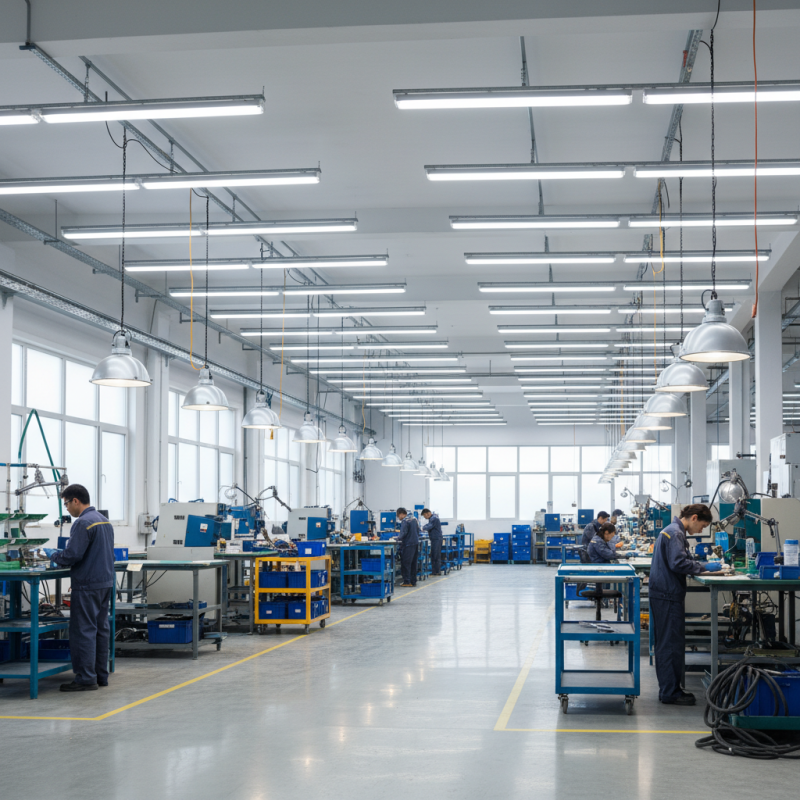
What is Factory Workshop Light? Definition and Purpose Explained
Factory workshop lights play a crucial role in ensuring safety and productivity. They are designed to provide sufficient illumination for various industrial tasks. Effective lighting improves visibility in workspaces, which decreases the likelihood of accidents. According to industry reports, workplaces with proper lighting can reduce errors by up to 20%. This statistic highlights the importance of selecting the right lighting solution.
When considering factory workshop lights, several factors come into play. One must evaluate the type of tasks performed in the space. For example, assembly lines may require brighter, focused lighting compared to storage areas. Studies suggest that optimal light levels for general tasks range from 200 to 500 lux. Additionally, energy efficiency is vital. Using LED lights can cut energy costs by up to 75%. However, the initial investment can be more than traditional bulbs, leading to concerns about budgeting.
Selecting the best lighting also involves understanding the layout of the workspace. Factors such as ceiling height and color schemes can affect light distribution. Overly bright lights can cause glare, impacting worker comfort and performance. It is essential to find a balance between brightness and comfort. Many factories struggle with this aspect, often leading to less-than-ideal working conditions. Proper planning can mitigate these issues and enhance overall productivity.
What is Factory Workshop Light and How to Choose the Best?
| Feature | Description | Importance |
| Lumens Output | The measure of light output. | High lumens output is crucial for visibility in factory environments. |
| Energy Efficiency | The ratio of light output to energy consumption. | Energy-efficient lights save on electricity costs and reduce environmental impact. |
| Color Temperature | Measured in Kelvin (K), indicating the light’s warmth or coolness. | Affects mood and can enhance productivity; typically ranges from 3000K to 5000K. |
| Durability | Resistance to impact, moisture, and dust. | Durable lights reduce maintenance and replacement costs in harsh environments. |
| Installation Type | Methods include ceiling mount, pendant, or wall-mounted fixtures. | Choosing the right installation type ensures optimal lighting coverage. |
Types of Factory Workshop Lights: LED, Fluorescent, and Halogen
In a factory workshop, choosing the right lighting is crucial. The three main types of lights are LED, fluorescent, and halogen. Each type has distinct characteristics. Knowing these can vastly improve efficiency and safety.
LED lights are energy-efficient. They last longer than both fluorescent and halogen lights. Reports show they can reduce energy costs by up to 75%. However, initial costs are higher. Their brightness can also vary significantly. This can affect visibility in critical work areas.
Fluorescent lights provide a cooler light spectrum. They are often used in larger spaces. These lights can flicker over time. This flickering can lead to eye strain for workers. Halogen lights have a warm light quality. They offer excellent color rendering. However, they consume more energy and produce more heat. This poses a risk in confined spaces. Each light type has specific pros and cons. Evaluating the needs of the workshop is key. Consider the environment and tasks at hand.
Key Factors to Consider When Choosing Workshop Lighting Solutions
When selecting the right lighting for a workshop, there are several key factors to consider. The primary goal is to ensure adequate visibility for tasks. According to the Illuminating Engineering Society, the recommended illuminance levels for general workshop tasks range from 300 to 750 lux, depending on the activity. This range helps to minimize eye strain and enhances productivity.
Color temperature is another crucial aspect. Lights with a higher Kelvin rating, around 4000K to 5000K, provide a daylight-like quality. This promotes alertness and accuracy. A study published by the American Society of Interior Designers highlights that appropriate color temperatures can improve focus by 30%.
Tip: Evaluate the space layout before installation. Identify activity zones and potential shadows that can affect visibility.
Energy efficiency also plays a part. LED lights, for instance, consume significantly less power while providing longer lifespan and better output. They can lower electricity bills by up to 75%, as reported by the Department of Energy.
Tip: Consider using dimmers or smart lighting controls. These allow for flexibility in brightness, accommodating different tasks and activities.
Lastly, don’t overlook maintenance. A poorly maintained lighting system can lead to inconsistent brightness and failed bulbs, ultimately disrupting workflow. Regular inspections can prevent this issue and ensure safety.
Workshop Lighting Options Comparison
This chart compares different workshop lighting solutions based on their efficiency measured in lumens per watt. LED lights offer the highest efficiency, making them the preferred choice for modern workshops. Fluorescent lights follow, while incandescent and halogen lights provide significantly lower lumens output, which may affect visibility in working environments.
Industry Standards and Regulations for Factory Lighting Requirements
In industrial settings, meeting lighting requirements is essential for safety and productivity. Factory lighting standards vary by industry and location. They often focus on brightness levels, uniformity, and glare reduction. Compliance with these standards is not optional; it’s crucial for both worker safety and efficiency.
Tips: Always check local regulations to ensure compliance. Regular audits can help maintain standards.
Proper factory lighting affects mood and focus. Poor lighting can lead to accidents and decreased morale. It's vital to create a well-lit environment that enhances visibility without causing
eye strain. Consider using adjustable fixtures to accommodate different tasks throughout the day.
Tips: Utilize natural light where possible. Install blinds or diffusers to manage glare effectively.
Be mindful of
energy consumption and maintenance costs. High-quality lighting may have a higher upfront cost but can save money over time. Regular lamp comparisons could reveal inefficiencies that need addressing. Balancing cost and quality is essential for a
sustainable lighting solution.
Comparative Analysis of Energy Efficiency in Workshop Lighting Options
When evaluating workshop lighting options, energy efficiency is a crucial factor. Different types of lighting offer varying levels of energy consumption and brightness. LED lights are among the most energy-efficient, consuming significantly less electricity than traditional incandescent bulbs. They provide bright illumination with longer lifespans, which minimizes replacement costs. However, the initial investment can be higher.
Fluorescent lights are another popular choice, providing decent energy savings. They typically use less power than incandescent bulbs but aren’t as efficient as LEDs. While they have a lower upfront cost, they require more frequent replacement. In industrial spaces, metal halide lights might be used for their high-intensity output. Yet, they are known for higher energy consumption and longer warm-up times.
When choosing workshop lighting, consider the specific needs of your workspace. Think about the tasks performed and the required visibility. Balancing energy efficiency with adequate lighting is essential. Sometimes, it may feel overwhelming to select the best option. Reflecting on personal experiences and actual performance can guide better decisions.