How to Choose the Best Led Luminaire for Your Needs?
Choosing the right LED luminaire can feel overwhelming. With so many options available, it's easy to get lost in the choices. An LED luminaire can greatly influence both aesthetics and functionality in any space.
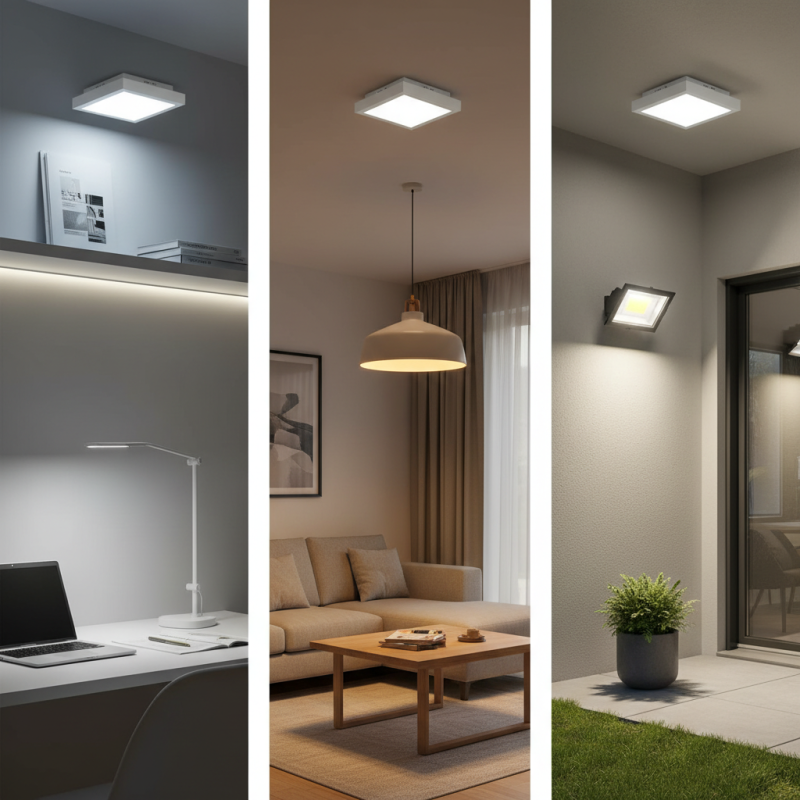
When selecting an LED luminaire, consider the intended use. For example, are you lighting a workspace, a living area, or an outdoor setting? Each environment requires different levels of brightness and design. Think about the color temperature too. Some lights are warm, while others emit a cooler tone. This affects the mood of your space.
Additionally, reflect on the energy efficiency of the LED luminaire. Not all luminaires are created equal. Some may promise savings, yet require more maintenance over time. Reading reviews or ratings can help identify the best options. Ultimately, your choices should enhance the space while aligning with your budget and style preferences.
Understanding Different Types of LED Luminaires Available in the Market
When selecting an LED luminaire, understanding the various types available is crucial.
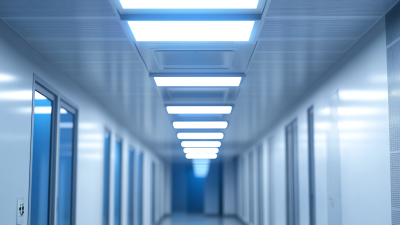
LED panel lights are popular for commercial settings. They provide even lighting and energy efficiency.
According to a recent industry report, these panels can save up to 50% on energy costs compared to traditional lighting.
This significant reduction attracts many businesses aiming to lower expenses.
There are also LED downlights and track lights.
These fixtures offer focused illumination and versatility. They are ideal for highlighting features in spaces like galleries or shops.
However, choosing the right beam angle is often overlooked. A beam angle that is too narrow might not provide sufficient coverage, leaving areas dim.
On the other hand, a wider angle may lead to unwanted glare.
Another option is LED floodlights, usually employed for outdoor lighting.
They can illuminate larger areas but often consume more power than other types. Some users find them too bright, affecting the ambiance of outdoor spaces.
It is easy to underestimate the impact of light quality on mood.
A balance between brightness and warmth is essential for comfort.
Consideration of all these factors can lead to better decision-making when choosing the right fixture for your needs.
Key Factors to Consider When Selecting LED Luminaires for Your Space
Choosing the right LED luminaire can significantly impact your space. Brightness is a crucial factor. Consider the lumens needed for different areas. A kitchen requires more light than a cozy reading nook. Too much brightness can create discomfort, while too little can hinder tasks. Assess your needs carefully.
Color temperature matters, too. Warm light (2700K-3000K) creates a cozy atmosphere, ideal for living rooms and bedrooms. Cool light (4000K-5000K) enhances focus, suitable for workspaces. Think about how each space feels. The wrong color can change the mood entirely.
Finally, energy efficiency is key. While initial costs may vary, energy-saving options lower bills over time. Check the estimated lifespan of the luminaire. Some models last longer than others. Quality matters, but it’s not always easy to discern. Reflect on past choices; maybe there were oversights. Your lighting can transform each room, so weigh your options wisely.
How to Choose the Best Led Luminaire for Your Needs?
| Feature |
Description |
Importance |
| Lumens |
Measure of light output; higher lumens mean brighter light. |
High |
| Color Temperature |
Indicates the warmth or coolness of the light (measured in Kelvins). |
Medium |
| CRI (Color Rendering Index) |
Measures the color fidelity of the light source, higher is better. |
High |
| Wattage |
Power consumption; lower wattage can mean greater efficiency. |
Medium |
| Lifespan |
Expected operational time of the luminaire (in hours). |
High |
| Dimmability |
Capability to adjust light intensity based on needs. |
Medium |
| Beam Angle |
Spread of light; narrow for focused light, wide for general lighting. |
Medium |
| Installation Type |
How the luminaire is installed (e.g., recessed, surface-mounted). |
High |
Evaluating Energy Efficiency and Lifespan of LED Lighting Options
When evaluating LED lighting options, energy efficiency is a crucial factor. According to the U.S. Department of Energy, LED lighting can consume up to 75% less energy than traditional lighting. This substantial reduction can lead to significant cost savings over time. When choosing an LED luminaire, consider its wattage relative to the luminosity it provides. It's common for high-lumen output to be achieved with lower wattage in LED technology.
Lifespan is another important criterion. LEDs typically last anywhere from 15,000 to 50,000 hours. This is far superior to incandescent bulbs, which often last only about 1,000 hours. However, not all LEDs are created equal. Some cheaper models may have shorter lifespans. Look for certifications or ratings indicating quality and durability. Many industry experts recommend checking for the LM-80 test results, which provide insights into lumen maintenance over time.
Despite the advantages, it’s essential to be cautious. Some LEDs may not perform as expected in specific environments. High temperatures can shorten their lifespan. It's worth noting that dimmable options may flicker or not perform well with certain fixtures. Engaging with knowledgeable professionals or consulting lighting guides can help in making informed decisions. Your specific needs are key to finding the right LED luminaire.
Energy Efficiency and Lifespan of Various LED Luminaire Types
Assessing Brightness and Light Quality for Specific Applications
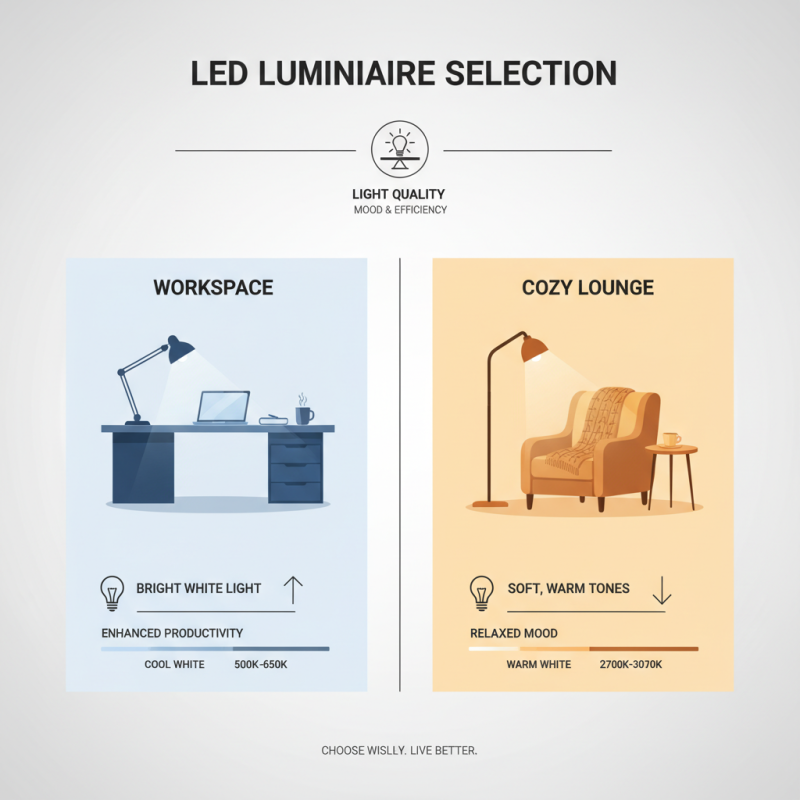
When choosing an LED luminaire, brightness and light quality are crucial. Different applications require different light intensities and colors. For example, a workspace needs bright white light to enhance productivity. In contrast, cozy settings like lounges benefit from softer, warmer tones. This balance affects mood and efficiency.
When assessing brightness, consider lumens. More lumens mean brighter light. However, too much brightness can be overwhelming. A dimmable option might be ideal. Pay attention to color temperature as well. Warmer tones (around 2700K) create a relaxing atmosphere. Cooler tones (above 4000K) promote alertness and focus.
Tips: Test the luminaire in your space. Observe how it looks at different times of the day. Don’t just rely on specifications. The correct type of light can transform a room. Ensure the light quality is consistent. Flickering lights can lead to strain. Keep in mind, what works in one setting might not suit another. Be ready to adjust based on your needs.
Comparing Costs and Return on Investment for LED Luminaires
When considering LED luminaires, evaluating costs and return on investment is crucial. Initial purchase prices can vary significantly. While some options are inexpensive, others may seem costly. It’s essential to analyze why. High-quality LED lights often use better materials. This means they can last longer and perform more efficiently.
Looking at energy savings, LED lights shine in comparison to traditional fixtures. They consume less electricity, which translates into lower bills. Over time, these savings add up, making the upfront investment worthwhile. However, not every LED luminaire will deliver the same savings. Poorly made products might fail quicker, negating any financial benefits.
Maintenance costs matter too. Some LED fixtures require less upkeep. Others may need frequent replacements or repairs. It’s essential to research these aspects thoroughly. Reflect on the total cost of ownership instead of just the initial price. A higher-quality LED could save you money in the long run. Always weigh your options carefully before making a decision. Each choice affects your finances and sustainability goals.