2026 Top 660nm 850nm Red Light Therapy Devices

Choosing among the 2026 Top 660nm 850nm Red Light Therapy Devices requires more than comparing prices and glossy claims. These devices typically combine visible red light at 660nm with near-infrared light at 850nm. The first wavelength is commonly used for surface-level applications, while 850nm may reach deeper tissue. However, penetration and biological response vary with skin tone, tissue thickness, distance, and device design.

Real-world testing begins with measurable details. Check irradiance, treatment area, timer accuracy, heat output, and wavelength tolerance. A panel that covers the shoulders evenly may be more practical than a brighter lamp with narrow coverage. Look for clear instructions, electrical certifications, eye-safety guidance, and transparent company information. Independent testing is helpful, though not every marketing label proves performance.

Evidence remains promising, but it is not unlimited. Red light therapy should not be presented as a universal treatment or a replacement for professional medical care. Some users report gradual changes after repeated sessions, while others notice little difference. Results are personal. That matters.

This guide compares leading options through a practical, evidence-aware lens. It considers construction, comfort, usability, published specifications, and reasonable safety precautions. Claims are treated carefully, because a confident sentence is not the same as strong evidence. Readers should also review product instructions and consult a qualified healthcare professional when they have medical conditions, take light-sensitive medications, or experience persistent symptoms. Expect useful distinctions, not miracles.
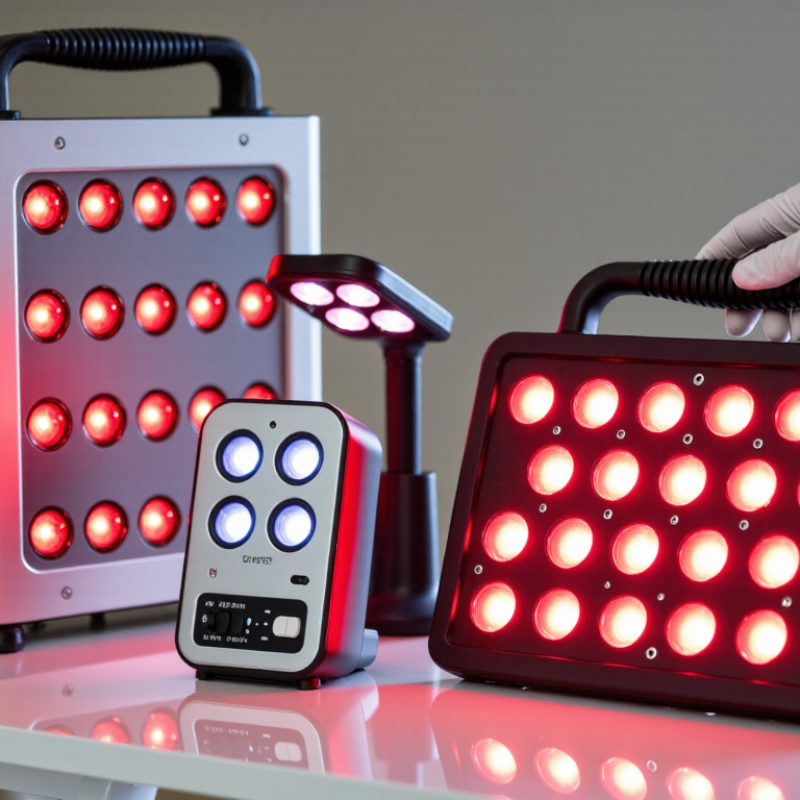
2026 Top 660nm 850nm Red Light Therapy Devices

660nm and 850nm Red Light Therapy: Core Principles and Differences

660nm and 850nm Red Light Therapy: Core Principles and Differences

Red light therapy uses specific wavelengths to deliver non-ionizing light to tissue. At 660nm, visible red light mainly reaches superficial skin layers. It may support cellular energy production and assist normal skin repair processes. At 850nm, near-infrared light travels deeper, potentially reaching muscles, joints, and other underlying tissues. The effect is not simply “stronger” light. Depth, dose, and tissue type all matter.

In practical use, 660nm can suit facial skin, small scars, or surface redness. The light appears visibly red, while warmth should remain mild.

An 850nm device may look dim or nearly invisible, yet it can deliver deeper exposure. Users often choose it for larger muscle areas after exercise.

I have found that distance changes the experience quickly. Moving a panel only a few centimeters closer can increase heat and discomfort.

A reliable routine depends on irradiance, treatment time, and wavelength accuracy. More exposure does not automatically produce better results. Research remains promising, but outcomes vary between conditions and individuals.

Some studies use carefully measured equipment, while home devices may provide less consistent output. Eye protection may be sensible, especially with bright panels or close-range use. Skin sensitivity, medications, and existing medical conditions also deserve professional review.

My earlier assumption was that visible brightness indicated effectiveness. It does not. That distinction is easy to miss when comparing devices.

How Red and Near-Infrared Wavelengths Interact with the Body

2026 Top 660nm 850nm Red Light Therapy Devices

Red and near-infrared light do not work like heat lamps. At 660nm, photons mainly interact with surface tissues, where absorption by cellular chromophores may influence mitochondrial activity. At 850nm, longer wavelengths generally travel farther through skin and soft tissue. Optical studies report millimeter-scale reach for visible red light, while near-infrared light may reach several centimeters under favorable tissue conditions. Real penetration varies with skin tone, tissue thickness, angle, and device output.

The proposed pathway involves cytochrome c oxidase, nitric oxide signaling, and cellular energy production. However, the response is not simply “more light, better results.” WALT guidance commonly places photobiomodulation doses near 1–10 J/cm², with careful control of irradiance and exposure time. A 2023 review in Photobiomodulation, Photomedicine, and Laser Surgery also noted substantial variation across clinical protocols. That matters.

A practical 660nm and 850nm device should disclose irradiance at a stated distance, not only total wattage. A session may feel barely warm. That is normal. Yet heat can still distort comfort and dosing. Evidence remains stronger for some pain, recovery, and wound-related applications than for general wellness claims, according to reviews indexed by the National Institutes of Health. My confidence drops when manufacturers hide measurements or promise universal effects. The biology is promising, but personal results remain uneven.

2026 Top 660nm 850nm Red Light Therapy Devices - How Red and Near-Infrared Wavelengths Interact with the Body

A practical comparison of common device formats, wavelength roles, operating ranges, and safe-use considerations

Device Format Typical 660 nm Configuration Typical 850 nm Configuration Common Treatment Area Typical Irradiance at the Skin Typical Session and Fluence How the Wavelengths Interact with the Body Practical Selection Notes
Full-Body Panel Visible red
Often included for surface-focused illumination and a balanced red/NIR output.
Near-infrared
Commonly paired with 660 nm to provide longer-wavelength exposure.
Front or back of the body; larger muscle groups and broad skin areas. Approximately 20–100 mW/cm², depending on distance, optics, and measurement method. About 5–20 minutes; approximately 6–120 J/cm² when the stated irradiance is accurate. 660 nm is absorbed more strongly near the surface, while 850 nm generally penetrates farther through tissue. Both wavelengths may be absorbed by cellular chromophores, including mitochondrial photoacceptors, but biological responses depend on dose and tissue type. Choose a panel with published irradiance at a defined distance, timer controls, stable mounting, and clear eye-safety instructions.
Half-Body Panel Usually supplied as a dedicated red channel or combined red/NIR mode. Frequently used as the primary deeper-reaching channel for muscle and joint areas. Torso, legs, back, or one side of the body at a time. Approximately 25–100 mW/cm² at the recommended treatment distance. About 5–15 minutes; commonly 7.5–90 J/cm². The red channel can provide stronger superficial exposure, whereas 850 nm may deliver a greater proportion of light to deeper tissues. Using both does not automatically produce better results; total dose remains important. A useful option for users who want broad coverage but have limited space or a smaller budget than a full-body setup.
Flexible LED Mat Often uses distributed 660 nm LEDs positioned close to the skin. May combine 850 nm LEDs with red LEDs for contact or near-contact use. Back, abdomen, shoulders, legs, or localized areas that can rest on the mat. Approximately 5–50 mW/cm², with output affected by fabric layers and body contact. About 10–30 minutes; approximately 3–90 J/cm². Close placement can increase delivered exposure even when the nominal power is lower. Red light is generally more surface weighted; NIR can reach deeper than visible red, although penetration is reduced by absorption and scattering. Check whether the manufacturer reports irradiance through any cover, not only the LED output in open air. Avoid excessive pressure, heat, or use over damaged skin.
Handheld Red/NIR Device Commonly centered around 630–660 nm for smaller surface areas. Often centered around 810–850 nm for localized applications. Face, hands, knees, elbows, small muscle groups, or specific treatment points. Approximately 10–100 mW/cm², depending on distance and contact design. About 3–15 minutes per area; approximately 1.8–90 J/cm². Light exposure falls quickly as distance increases. A handheld device can be useful for targeting, but uneven movement or changing distance may produce uneven dosing across the treatment area. Look for a defined treatment distance, treatment-area dimensions, battery safety, automatic shutoff, and a documented output measurement.
Face Mask Typically uses red light in the 630–660 nm range for close facial exposure. Some models add 830–850 nm LEDs, usually at a lower or comparable channel output. Facial skin, excluding the eyes and any area restricted by the device instructions. Approximately 5–40 mW/cm² at the facial surface. About 5–15 minutes; approximately 1.5–36 J/cm². 660 nm is primarily relevant to superficial facial tissues. 850 nm may provide a longer-wavelength component, but facial sensitivity and eye protection requirements should take priority over maximum intensity. Use only as directed. Confirm that the mask fits securely, does not create excessive heat, and includes appropriate eye shielding or eye-safety guidance.
Targeted Joint or Muscle Wrap May use 630–660 nm LEDs for the skin-facing component. Frequently includes 810–850 nm LEDs for localized muscle or joint coverage. Knee, shoulder, wrist, elbow, calf, or other wrap-compatible areas. Approximately 5–60 mW/cm², varying with fit and fabric thickness. About 10–30 minutes; approximately 3–108 J/cm². Flexible positioning can keep the LEDs close to the skin, while 850 nm generally has greater tissue penetration than 660 nm. Local heating, compression, and the actual delivered dose should be considered separately. Prefer adjustable, breathable designs with temperature control and independent evidence for output at the skin rather than relying only on LED wattage.
LED Light Bed or Large Canopy Usually provides broad 660 nm coverage across the front, back, or both sides. Often combines 850 nm with red wavelengths for full-body exposure. Large body areas with minimal repositioning. Approximately 10–60 mW/cm², depending on bed geometry and user distance. About 10–30 minutes; approximately 6–108 J/cm². Large-area exposure may improve convenience, but the dose can vary across the body because of LED spacing, body curvature, and distance. Red and NIR channels should be evaluated independently when possible. Suitable for users prioritizing coverage and convenience. Verify ventilation, electrical certification, timer operation, and whether the stated irradiance is measured over the entire treatment area.
Low-Intensity Wearable Patch May use red LEDs near 630–660 nm for a small skin area. Some designs add 830–850 nm, while others use red light only. Small localized areas requiring portability. Approximately 1–20 mW/cm². About 15–60 minutes; approximately 0.9–72 J/cm². Lower irradiance may require longer sessions to reach a comparable fluence. Because the treatment area is small, correct placement and consistent skin contact are especially important. Check battery temperature, adhesive materials, recharge instructions, and whether the product is intended for continuous wear or timed sessions.
Important interpretation: Irradiance and fluence values in this table are practical ranges commonly discussed for consumer photobiomodulation devices, not universal treatment prescriptions. Actual output varies with wavelength, distance, LED efficiency, optics, skin contact, and measurement equipment. More light is not necessarily better; follow the device instructions, protect the eyes when required, and seek professional advice for photosensitivity, medication-related light sensitivity, pregnancy-related concerns, implanted electronic devices, or significant medical conditions.

Key Features of Top 2026 Red Light Therapy Devices

In 2026, leading red light therapy devices should make their specifications easy to verify. A 2024 Grand View Research analysis estimated the global red light therapy market at roughly US$1 billion in 2023, reflecting rising consumer demand and stricter product comparisons. The strongest devices commonly combine 660nm red light with 850nm near-infrared light. The 660nm range is generally selected for more superficial skin exposure, while 850nm may reach deeper tissue. These labels alone prove little.

Key features include measured irradiance, treatment distance, session duration, and total energy dose. A calibrated optical meter is more useful than a dramatic number printed on packaging. Higher irradiance is not automatically better. It can increase heat, discomfort, or dosing errors. Independent testing should confirm wavelength accuracy across the treatment area, not just at the center. That detail is often missing.

Safety design also matters. Look for eye protection guidance, thermal monitoring, timer controls, stable panels, and electrical compliance documentation. The 2023 Global Wellness Institute market report placed wellness spending above US$6 trillion worldwide, showing why home devices attract intense attention. However, market growth is not clinical proof. A 2024 review in Photobiomodulation, Photomedicine, and Laser Surgery described promising applications but noted inconsistent protocols across studies. Buyers should record skin response, distance, and session length. Results may be slower than advertisements suggest. That is worth admitting.

2026 Top 660nm and 850nm Red Light Therapy Devices

Key optical features of the two most common therapy wavelength bands. Frequency and photon energy are calculated from the wavelength using the speed of light and Planck’s constant.

Interpretation: 660nm red light has a shorter wavelength, higher frequency, and higher photon energy than 850nm near-infrared light. The 850nm band is invisible to the human eye and is commonly selected for near-infrared applications. Actual device performance also depends on irradiance, treatment distance, coverage area, thermal management, and exposure time.

How to Compare Power, Coverage, Safety, and Ease of Use

2026 Top 660nm 850nm Red Light Therapy Devices

How to Compare Power, Coverage, Safety, and Ease of Use

Power should be judged at the skin, not from LED count alone. Check irradiance in mW/cm², testing distance, and measurement conditions. A device may advertise high wattage yet deliver uneven output across the treatment area. In practical use, I would measure the center and edges if reliable testing equipment is available. Distance matters. Moving a panel only a few centimeters can change the exposure significantly.

Coverage affects convenience and consistency. A face mask covers less area than a larger panel, while a flexible unit may fit shoulders or knees more comfortably. The 660nm wavelength is commonly used for surface-level red light applications. The 850nm wavelength is near-infrared and may reach deeper tissue. These descriptions are not promises of medical results. Use a timer, keep the recommended distance, and avoid extending sessions simply because the light feels mild.

Safety needs more attention than appearance. Look for clear instructions, heat control, electrical certifications, and realistic exposure guidance. Protect your eyes when the light feels intense, especially with close-range devices. People using photosensitizing medication or managing a medical condition should ask a qualified healthcare professional before use. Ease of use is easy to underestimate. A stable stand, quiet cooling fan, washable surface, and simple controls make regular use more realistic. I still find some impressive-looking devices awkward after one week. That is a useful warning.

Choosing the Right 660nm and 850nm Device for Your Needs

Choosing the Right 660nm and 850nm Device for Your Needs

A 660nm and 850nm device combines visible red light with near-infrared light. The 660nm range mainly supports surface-level skin goals, while 850nm reaches deeper tissue. These effects are not guaranteed, and individual responses vary. Consider your purpose before comparing appearance, price, or extra features.

Check the device’s measured wavelength, irradiance, treatment area, timer, and distance instructions. A clear safety guide matters more than impressive marketing language. For facial use, a smaller panel may offer better control. For larger muscle areas, a wider panel can reduce session time. Avoid assuming stronger output means faster results. That shortcut can increase heat and discomfort.

Start with short sessions at the manufacturer’s recommended distance. Protect your eyes when the device is bright or used near the face. People with light-sensitive conditions or certain medications should ask a qualified healthcare professional before use. Keep a simple record of duration, distance, skin comfort, and visible changes. It may reveal patterns.

A practical choice is rarely perfect. Some devices publish incomplete testing data, which makes comparisons difficult. I would favor transparent specifications over dramatic claims. Look for stable construction, easy cleaning, and controls you can use consistently. Consistency matters. If warmth, irritation, headache, or unusual discomfort appears, stop and reassess the setup rather than pushing through it.